


Whether it’s a quiet markdown or an unexpected sale, there’s something uniquely annoying about seeing the price drop on something you just bought.
It’s exactly this frustration that price drop protection is meant to solve. Traditionally offered as a credit card perk, it reimburses you when an item you purchased drops in price within a specific time window. The whole point is to remove the pressure of timing purchases and spare you from the post-purchase regret.
So, what is price drop protection exactly? How does it work, and what counts as a valid price drop? This article addresses all these questions and shows you an alternative way to reclaim the money you’re owed effortlessly, by relying on Settlemate.
What is price protection?
Price protection is a credit card benefit enabling you to get reimbursed for the difference if an item you purchased drops in price within a set period after checkout.
A key detail: this feature is typically offered by credit card issuers, not retailers, and it only applies to purchases made with an eligible credit card. If you find the same item advertised for less within the allowed window (usually 30 to 90 days, depending on the card), you can file a price protection claim and get the price difference back.
Price drop protection can be a genuine stress-reducer because it means:
- You don't have to worry about purchasing too early.
- You don’t need to obsessively monitor prices right after checkout.
- You may still be eligible for reimbursement even if you’ve already opened or used the item.
- You don’t need to bother with the return-and-repurchase approach.
What are the credit cards with price protection options?
Price drop protection used to be much more common. What was once a standard perk is now offered by only a small number of cards, often tied to specific networks (like World Elite Mastercard and Visa Infinite) or more niche issuers.
These days, the benefit also comes with stricter limits, tighter eligibility rules, and plenty of fine print.
Here are some examples of credit cards with price protection, along with their key benefits:
Purchase protection vs. price protection vs. extended warranty
While these three policies sound similar, they’re designed to protect you from different kinds of risks. Here’s a quick breakdown:
- Price protection: It focuses on pricing, not the product itself. It reimburses you if the exact item you bought goes on sale within a specified time frame after purchase. It applies only to eligible purchases made with certain credit cards and requires you to submit a claim with proof of the lower price. Nothing has to be wrong with the item; it just needs to get cheaper.
- Purchase protection: Also known as purchase security, it can cover theft or accidental damage for a short period (typically 90 days) after you make a purchase. If your new item is stolen or accidentally damaged, you can file a claim with your credit card issuer for reimbursement, usually subject to per-claim and annual caps. This benefit generally doesn’t cover lost items, normal wear and tear, or most consumables, and it often works as secondary coverage if you already have homeowners or renters insurance.
- Extended warranty: This one is about long-term functionality, not pricing or accidents. It extends the manufacturer’s warranty and may cover repairs or replacement if the item stops working due to mechanical or electrical issues. Extended warranties are often paid add-ons (either upfront or monthly), though some credit cards automatically extend warranties on eligible purchases at no extra cost. Theft, loss, accidental damage, and normal wear and tear are typically excluded from coverage.
How does a price protection benefit work?
In theory, price protection claims seem simple: you buy an item, find a lower price, and get the difference back. In practice, the process involves several steps and a fair amount of documentation.
Here’s how price drop protection typically works, step by step:
- Make a purchase with an eligible credit card: If you use a different card, the benefit won’t apply, even if the price drops the very next day.
- Spot a lower price within the claim window: Some programs require the lower price to come from the same retailer, while others allow competing retailers.
- Gather proof of purchase and proof of the price drop: To file a price protection claim, you usually need:
- A copy of your credit card statement showing the purchase
- An itemized receipt or e-receipt
- Evidence of the lower price, such as a flyer, product link, or screenshot showing the item, price, and date
- File a price protection claim: Claims are typically filed through a third-party administrator, not the retailer directly. You upload (or mail) your documentation and wait for the claim to be reviewed.
- Get reimbursed if your claim is approved: If your claim is accepted, you’ll receive the price difference back, usually as a statement credit, check, or payout from the benefits administrator. Most programs also include reimbursement caps per item and/or per year.
What’s usually excluded from price drop protection?
The item you’re filing a claim for must be identical to the one you originally bought. The lower price typically needs to be publicly advertised and the item currently available (not a one-off glitch, member-only deal, or “sold out, but technically listed” situation).
The table below shows what’s commonly excluded from price drop protection policies:
Important: Some cards exclude internet purchases altogether. It’s worth checking your card’s benefits guide before you rely on this perk. Otherwise, you might end up tracking a price drop that never qualified in the first place.
What’s the alternative to credit card price drop protection?
Many major issuers have scaled back or removed price drop protection entirely. But that doesn’t mean post-purchase refunds are off the table. It just means that the “who pays you back” part has changed.
Price adjustment refunds are a retailer-based alternative to traditional credit card price drop protection. Instead of your card issuer, it’s the retailer that refunds you the price difference, as long as you meet their eligibility requirements, such as:
- You’ve bought an item at full price.
- You notice the price drop and submit a claim within a retailer’s price adjustment window (usually 7–14 days).
- The item is an exact match, from the same retailer (though some stores, like DICK’s Sporting Goods and Home Depot, offer competitor price matching, even after purchase).
Price adjustments work almost the same way as price protection, which also means you have to track your purchases, monitor prices, verify eligibility, gather proof, submit claims, and engage in customer support back-and-forth. Miss the window by a day, lose the receipt, or overlook an exclusion, and the refund opportunity is gone.
In reality, most shoppers aren’t eager to closely monitor prices or jump through customer support hoops just to reclaim a few dollars. That’s why many decide that requesting a price adjustment simply isn’t worth the hassle.
Leave money on the table once or twice, and it’s no big deal. Let it happen regularly, and it turns into real money.
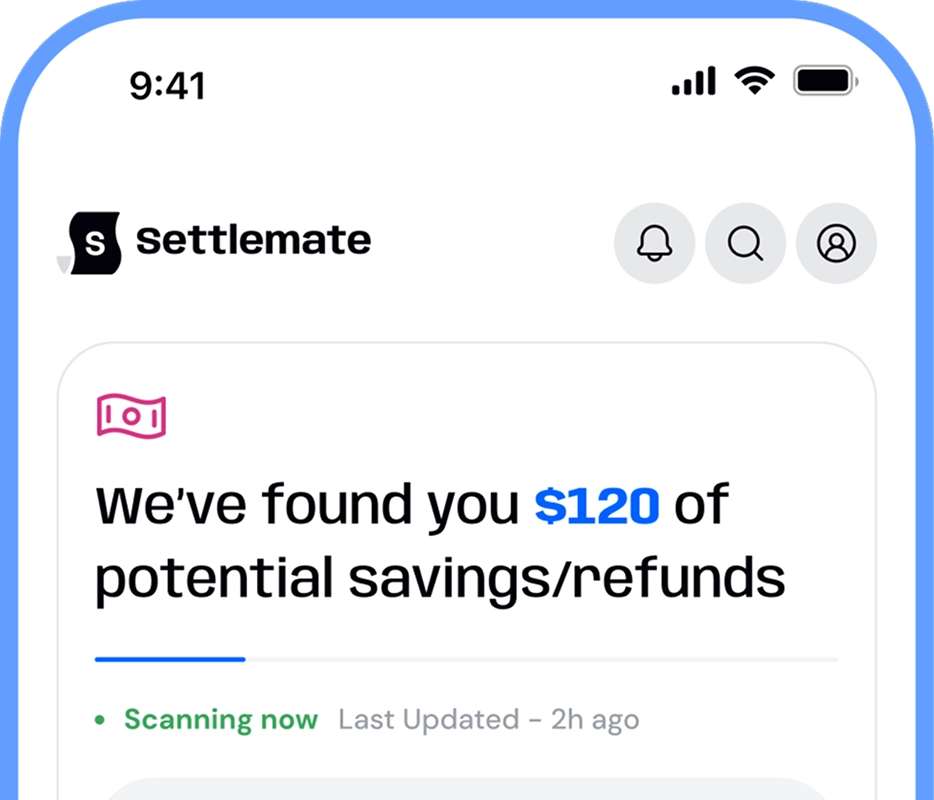
That’s where an app like Settlemate comes in. It can scan your receipts, check for eligible price drops within retailer windows, and automatically submit claims for you, so you don’t have to chase price drops or deal with customer support back-and-forth.
How Settlemate puts price adjustment refunds on autopilot
Every store has different rules for price adjustments. But you don’t need to memorize every policy; Settlemate Retail Savings Autopilot does that for you, and even takes action on your behalf.
The Settlemate app will:
- Automatically find your digital receipts in your inbox.
- Continuously track for price drops within eligible windows.
- Auto-file requests with the right documentation.
- Notify you when your money is on its way back to you.
Automate price adjustments end-to-end with Settlemate Retail Savings Autopilot. Download the app from the App Store or Google Play today.

Not sure if the app’s right for you? Settlemate’s Value Guarantee means we’re committed to helping your membership pay for itself. If it hasn’t after a qualifying year, we can extend your membership at no cost every 12 months until it does.
Which retailers offer price adjustment refunds?
Not every retailer handles price adjustments the same way. The guides below explain which major brands offer price adjustments, what qualifies, and how much time you have to request a refund: