

You’ve booked your trip and are ready to travel. Then, a few hours before departure, you get a notification that your flight has been canceled. Now you’re scrambling to find alternative flights, rearrange reservations, and figure out whether you’ll make it to your destination at all. To make matters worse, the airline offers little explanation beyond a vague statement about “operational issues” or “extraordinary circumstances.”
EU 261 air passenger rights help address these scenarios, but the rules and eligibility aren’t always clear-cut.
This EU 261 compensation guide explains which flights are covered, how much you can claim, and when airlines can legally refuse payment. You’ll also learn how Settlemate can identify eligible disruptions and submit flight disruption claims automatically.
What is EU Regulation 261/2004 on passenger rights?
Flight disruptions create inconvenience and lead to missed connections, unexpected hotel costs, lost vacation time, and significant stress. To protect passengers from these situations, the European Union introduced rules requiring airlines to provide assistance and, in certain cases, financial compensation when disruptions are within their control.
This regulatory framework, commonly known as EU 261, establishes minimum protections for airline passengers traveling on qualifying flights. If your flight is significantly delayed, canceled, or if you’re denied boarding due to overbooking, you may receive financial compensation of up to €600, along with additional assistance, depending on the type of disruption.
Good to know: You may also see this regulation referred to as EC 261. EU 261 and EC 261 are often used interchangeably because the regulation’s official name is Regulation (EC) No 261/2004. EC stands for European Community, predecessor of the modern European Union.
Which flights are covered by the EU Regulation 261/2004 on air passenger rights?
EU 261 applies broadly across Europe. In addition to all EU member states, it extends to Iceland, Norway, and Switzerland under related international agreements. The United Kingdom, though no longer in the EU, remains covered by an equivalent domestic regulation known as UK 261.
EU 261 air passenger rights apply to:
- Flights within the EU operated by an EU or non-EU airline
- Flights operated by an EU airline arriving in the EU from outside the EU
- Flights departing from the EU to a non-EU country operated by an EU or non-EU airline
Who can claim EC 261 compensation?
You may be eligible to claim EC/EU 261 compensation if all of the following apply:
- You had a confirmed reservation.
- You checked in on time (unless the flight was canceled before check-in).
- Your flight qualifies under EU 261 coverage rules.
- The disruption meets the compensation eligibility requirements (e.g., the delay was 3+ hours).
- The airline was responsible for the disruption.
Compensation rights generally belong to the individual passenger rather than the person who purchased the ticket. That means:
- Business travelers can claim compensation even when their employer paid for the flight.
- Family members traveling on the same booking may each have separate compensation rights.
- Children with paid seats may also be eligible for compensation.
Important: Receiving a refund, meal voucher, hotel accommodation, or rebooking doesn’t eliminate your right to cash compensation. In many situations, you may be entitled to both assistance and compensation. However, you’re typically not eligible for cash compensation if you’ve already accepted an alternative form of compensation, such as a travel voucher.
When are you eligible for compensation under EU 261 passenger rights?
Whether you’re entitled to EU 261 compensation depends on a couple of factors, such as:
- The type of disruption
- The length of the delay
- The length of your flight
- When you were notified
- Whether the airline was in any way responsible for the problem
In general, EU 261 covers the following flight disruptions:
- Flight delays
- Flight cancellations
- Denied boarding
- Missed connecting flights
1. Flight delays
When your flight is delayed, you may be entitled to both assistance and cash compensation. These are two separate rights, so airlines often provide assistance during delays even when compensation isn’t legally owed.
If your flight is delayed by two or more hours, the airline must provide:
- Meal vouchers
- Refreshments
- Communication (phone calls, emails)
- Hotel accommodation
- Transport to and from the hotel
If your flight is delayed by five or more hours, you can choose not to travel and request:
- A full refund of your unused ticket
- A refund of any unused portions of your ticket
- A return flight to your original departure point if your trip no longer serves its purpose
Cash compensation may apply when you arrive at your final destination three or more hours late. Note that the arrival time matters, not the departure time. Even if your flight departs significantly late, you may not receive any compensation if it arrives on time.
The amount of compensation for a delayed flight depends on your flight distance. Here’s the EU 261 compensation table for flight delays:
Note: Airlines can cut your compensation in half if they rebook you on a flight that gets you to your destination close to your original arrival time, specifically:
- Within two hours for flights under 1,500 km
- Within three hours for flights between 1,500 km and 3,500 km
- Within four hours for long-haul flights over 3,500 km
2. Flight cancellations
When a flight is canceled, you may be entitled to:
- Compensation
- Rebooking
- Refund
- Meals and accommodation while waiting for alternative travel arrangements
However, EU 261 compensation only applies if:
- The airline notified you of the cancellation less than 14 days before departure.
- The airline notified you less than 14 days before departure and didn’t offer an acceptable alternative flight under EU 261 rules.
The table below shows which rerouted flights may be considered acceptable:
If the airline fails to meet these rerouting requirements, it may owe compensation. The compensation for a canceled flight depends on your flight distance and is the same as for delayed flights.
3. Denied boarding
Denied boarding usually occurs when airlines oversell flights and more passengers arrive than there are available seats. If this happens, airlines first ask for volunteers to give up their seats in exchange for other benefits. If not enough volunteers come forward, the airline can deny boarding to passengers against their will.
You’re generally entitled to immediate compensation if you’re denied boarding against your will and you:
- Have a valid ticket
- Arrive at check-in on time
- Have all required travel documents
The compensation amount depends on your flight distance and is always the same.
Unlike delays and cancellations, denied boarding claims are often among the most straightforward cases because overbooking is invariably the airline’s fault.
If you’re involuntarily denied boarding, you may also be entitled to:
- A replacement flight
- A refund
- Meals and refreshments
- Hotel accommodation and ground transport, if necessary
4. Missed connecting flights
Missed connections can also qualify for EU 261 compensation if all legs of the journey were booked under the same reservation.
Imagine you’re flying from Lisbon to New York via Paris. If your Lisbon to Paris flight is delayed and causes you to miss your onward flight, EU 261 looks at your delay at the final destination, not the delay of the first flight segment.
If you arrive in New York more than three hours late and the disruption was within the airline’s control, compensation may be available.
How do extraordinary circumstances affect flight compensation?
Under EU air passenger rights regulation 261/2004, airlines can avoid paying compensation if they can demonstrate that the event causing the disruption is considered an extraordinary circumstance. To be qualified as such, the event must meet the following conditions:
- The disruption was caused by events outside the airline’s control.
- Events causing the disruption are outside the airline’s normal operations.
- The disruption couldn’t have been avoided even if all reasonable measures had been taken.
Note: Even though extraordinary circumstances remove your right to compensation, they don’t eliminate your other passenger rights, including assistance, rerouting, and refunds.
This exception exists because airlines shouldn’t be held responsible for events they genuinely can’t prevent. However, airlines are sometimes quick to label disruptions as extraordinary circumstances, even when the underlying cause may have been within their control.
Below, you can see examples of extraordinary circumstances and factors within the airline’s control:
For example, if a flight is canceled because the airline discovers a mechanical issue during routine maintenance, compensation may still be owed, as routine technical problems are generally part of running an airline.
However, if military activity results in the closure of airspace over a region, airlines may be forced to cancel or reroute flights. This is an extraordinary circumstance beyond the airline’s control.
How armed conflicts and geopolitical instability affect flight operations
Armed conflicts, military activity, political unrest, and geopolitical tensions can significantly impact air travel. In some cases, governments or aviation authorities may restrict access to certain airspace, issue safety warnings, or temporarily close airports. Airlines may choose to suspend routes, reroute flights, or cancel services if operating them would pose a safety risk.
Because these events are outside an airline’s control, they are often considered extraordinary circumstances under EU 261.
A recent example is the ongoing instability in parts of the Middle East. Airlines operating routes to, from, or through the region have periodically faced airspace closures, security concerns, and government-imposed restrictions. As a result, some flights have been delayed, changed, or canceled with little notice. In these situations, airlines are not required to pay compensation if they can demonstrate that the disruption was caused by safety risks or restrictions linked to conflicts.
However, the existence of a conflict doesn’t automatically exempt an airline from compensation. The airline must still show that it took all reasonable measures to avoid or minimize the impact on passengers.
Additionally, flight disruptions can have multiple contributing factors, and not all of them necessarily qualify as extraordinary circumstances.
Example: If a flight is canceled because aviation authorities closed the airspace, compensation may not be owed. On the other hand, disruptions caused by staffing shortages or scheduling issues that occur after the airline has adjusted its operations may still fall within the airline’s control.
Why airlines often cite extraordinary circumstances, and what to do if your claim is denied
Extraordinary circumstances are among the few situations in which airlines can avoid paying compensation under EU 261. As a result, many denied claims reference weather, operational restrictions, safety concerns, or other external factors.
That doesn’t necessarily mean the denial is valid. In some cases, the airline may:
- Provide only a vague explanation
- Cite multiple factors contributing to the disruption
- Continue to delay the flight due to operational issues, even after the extraordinary event has ended
- Struggle to prove it took all reasonable measures to avoid the disruption
This issue can be particularly relevant if you’re experiencing flight disruptions due to conflicts in the Middle East.
Before accepting a denial, review the airline’s explanation carefully and gather as much information as possible about the reason for the disruption. Here’s what to do before you submit a claim or appeal if you believe the disruption was within the airline’s control:
- Request a detailed explanation of the disruption, preferably in writing
- Keep all emails, notifications, and travel documents
- Save any messages that reference airspace closures, security concerns, or operational issues
- Check whether the cited event is recognized as extraordinary under EU 261
- If the disruption was linked to a regional conflict, ask the airline to specify how the conflict affected your flight
Pro tip: When submitting your compensation claim, reference the EU 261 regulation directly. Airlines usually take you more seriously when you show that you’re familiar with relevant passenger protection laws.
Why manual flight compensation claims often fail
The line between extraordinary circumstances and airline responsibility isn’t always obvious. But that legal distinction is only one part of the reason why many passengers never receive the compensation they’re entitled to.
The claim process can be surprisingly difficult, and you may run into problems such as:
- Missing documentation necessary to support your claim
- Unclear explanations from airlines about the cause of the disruption
- Long response times and repeated follow-ups
- Denied claims without sufficient details
It can be especially tricky to determine whether the airline’s explanation is truly valid when disruptions involve factors like airspace closures and regional conflicts. As a result, many travelers give up midway or never even file a claim.
This is where automation can make a difference. An app like Settlemate can do all the heavy lifting for you, from spotting the disruption to managing communications with the airline.
Make flight compensation claims effortless with Settlemate
Knowing your rights under EU 261 is one thing. Successfully claiming compensation is another.
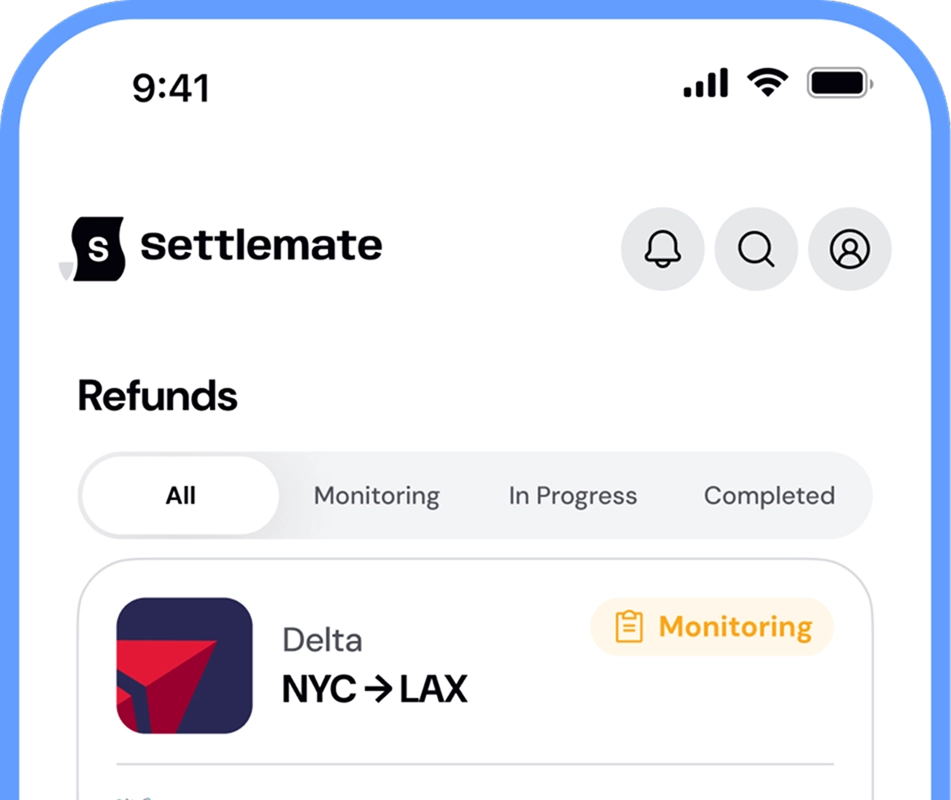
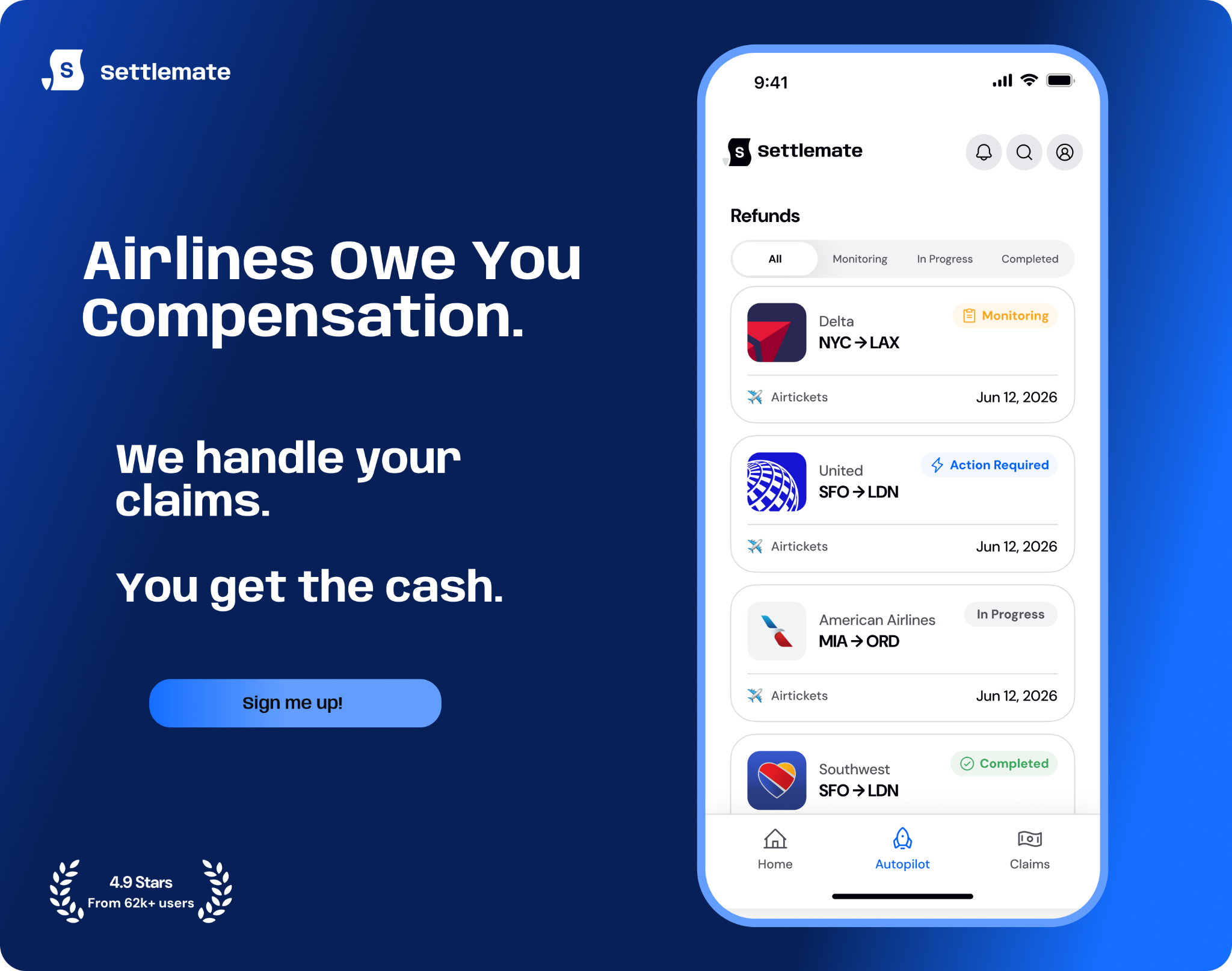
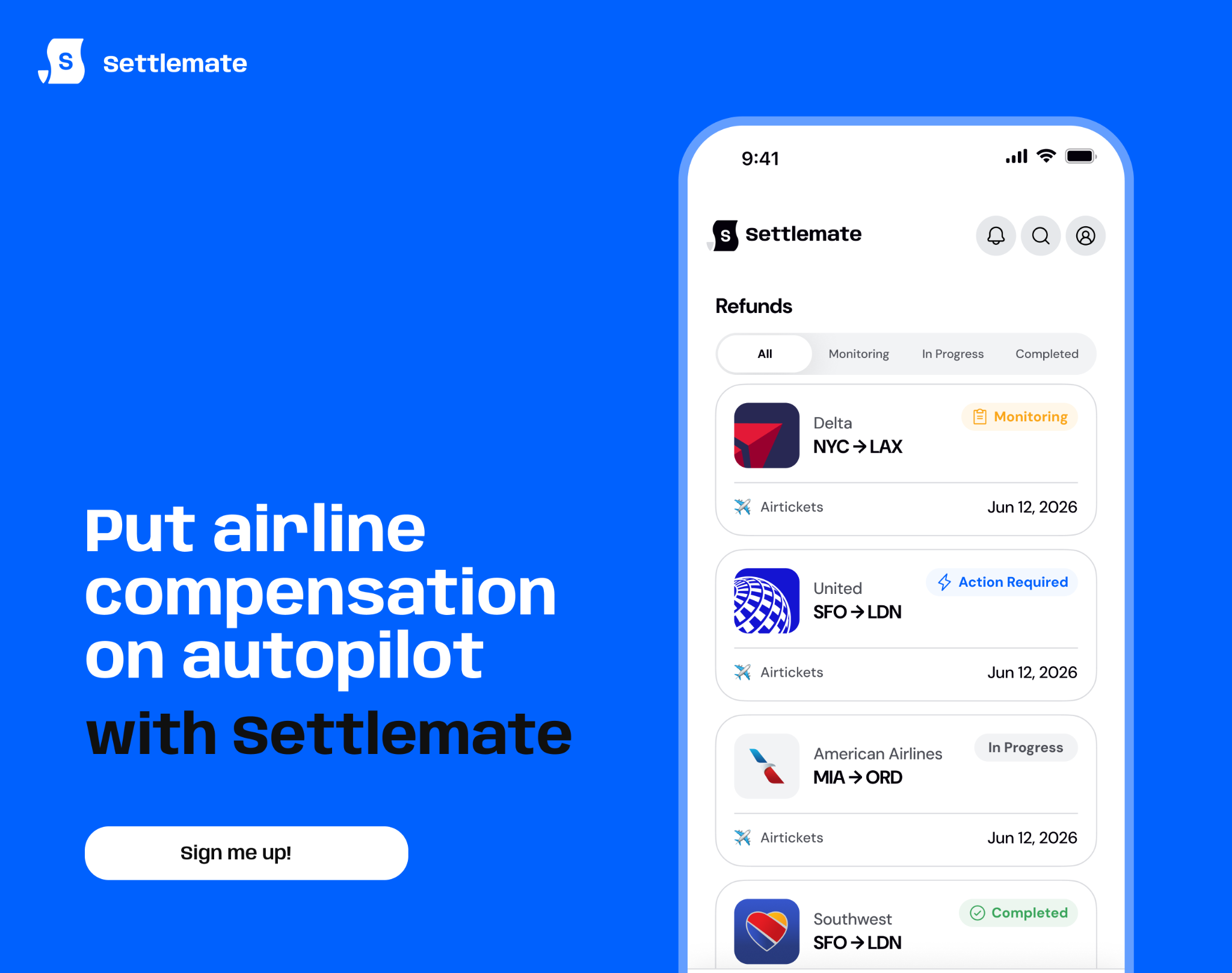
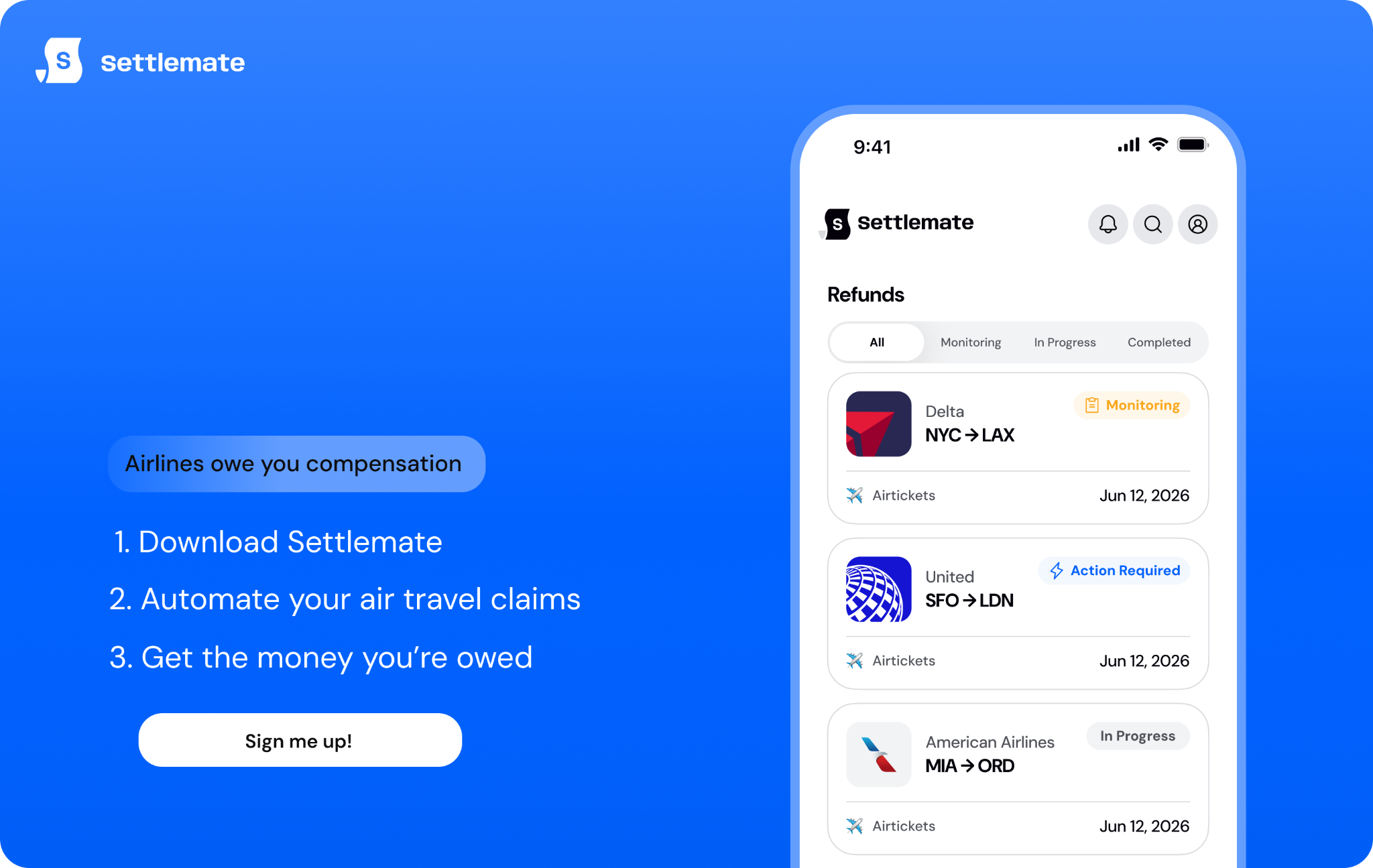
Settlemate is an app that helps travelers claim compensation for flight disruptions. It handles the claim process for you, monitoring for eligible disruptions, identifying compensation opportunities, and doing the administrative legwork so you don’t have to.
Here’s how Settlemate works:
- Scans your inbox for flight disruptions, such as delays, cancellations, diversions, luggage issues, and other changes
- Applies relevant passenger rights frameworks, including EU 261, U.S. DOT rules, and the Montreal Convention
- Reviews airline-specific disruptions and refund policies for your trip
- Prepares and submits claims automatically
- Tracks claim progress and follows up when necessary
- Escalates claims that may warrant additional review
If an airline needs more information from you, Settlemate notifies you and explains what to provide, so you can respond quickly without checking airline websites or sitting on hold.
Download the app from the App Store or Google Play and let it handle your compensation claims end to end.
What if Settlemate doesn’t deliver value? If your membership hasn’t paid for itself after a year, we can extend your membership at no cost every 12 months until it does. Check out our Value Guarantee to learn more.