

A diverted flight isn’t just an inconvenience. It can throw off hotel reservations, connecting flights, business meetings, or family events you can’t really reschedule.
But it’s not just your bad luck. Flight diversions happen every day due to air traffic congestion, bad weather, or technical issues. What airlines often don’t mention is that if you’re affected, you might be entitled to diverted flight compensation, including care, refunds, and sometimes even cash payouts.
In this guide, we’ll explain:
- What counts as a diverted flight
- What your rights are in the United States, Europe, and Canada
- How much compensation you could get and how to claim it
We’ll also show you how Settlemate can make the process effortless by automatically detecting eligible flight disruptions and handling your compensation claims from start to finish.
What is a diverted flight?
A diverted flight means that your plane was forced to land at an airport other than your originally scheduled destination. This usually happens mid-journey and often with little or no warning.
Common reasons for diversion include:
- Severe weather
- Medical emergencies that require immediate landing
- Technical or mechanical issues
- Air traffic control restrictions
- Security threats
- Not having enough fuel to reach the intended airport
Some diversions, like those caused by bad weather, are unavoidable. Others, such as technical problems or operational errors, are typically the airline’s responsibility. The cause of the diversion matters because it directly affects your rights as a passenger and determines whether you have a shot at compensation.
What are your diverted flight passenger rights?
When your flight gets diverted, airlines generally have obligations toward passengers. They should provide care and assistance during the delay. Depending on the location and circumstances, you could also be entitled to a refund or cash compensation.
Airlines are required to provide immediate support whenever a diversion leaves you waiting for hours. This includes essentials such as:
- Meals and refreshments appropriate to the wait time
- Hotel accommodation if you are stranded overnight
- Working lavatories
- Transportation between the airport and the hotel
- Medical attention if needed
- Means of communication, such as phone calls or emails
What you’re entitled to depends on how long you wait and the passenger protection law covering your flight. Here are the main legal frameworks and the flights they cover:
Beyond immediate care, you might also qualify for:
- Cash compensation
- Reimbursement for out-of-pocket expenses caused by the diversion, like meals or rebooking fees
- Refund for the ticket price
Tip: If the airline isn’t clear about what kind of immediate support you’ll get, keep all your receipts and request reimbursement later.
Can you get compensation for a diverted flight?
The short answer: yes, you are generally entitled to compensation for a diverted flight. But your eligibility and the compensation amount come down to a few key factors:
- The cause of the diversion
- Regulations that apply to your route
- The length of your delay
- Your airline’s policies
Airlines can legally avoid cash payouts when a diversion is caused by extraordinary circumstances beyond their control, such as:
- Severe weather
- Natural disasters
- Air traffic control strikes
- Political instability
- Security threats
Even in these cases, airlines remain responsible for providing care and assistance, but not for cash compensation.
However, if the diversion was caused by technical failure, crew shortage, or a similar issue that’s considered within the airline’s control, you could be eligible for compensation. Depending on the regulation and how long your arrival was delayed, here’s what you might get:
Tip: Travel insurance can cover expenses airlines don’t, like meals or hotels. The usual approach is to file a claim with the airline first based on your passenger rights, then seek additional reimbursement from your insurer or credit card coverage if needed.
How much cash compensation can you get for a diverted or rerouted flight?
For domestic flights within the U.S. and international flights under the Montreal Convention, you don’t get cash compensation. In the U.S., you can only get a full refund of the ticket price if the delay is significant and you don’t accept the airline’s alternative (such as a rebooked flight).
Meanwhile, the EC261 keeps the compensation amount non-negotiable and calculates it based on flight distance. So, if your flight arrives three or more hours later than expected, here’s how much you’re owed:
Even if you arrive less than three hours late, you might still be eligible, but your compensation is reduced by 50%.
The Canadian APPR also clearly outlines how much you’re owed. The compensation amount is calculated based on carrier size and arrival delay:
How to claim compensation for flight diversion
Every airline handles compensation claims differently, and the rules depend on the passenger protection framework that applies to your route. That said, the basic steps are similar across the board:
- Confirm the reason for the diversion: Ask the airline staff why your flight was diverted, since the cause affects your eligibility for compensation.
- Track your arrival time: Most claims depend on when you reach your final destination. Keep a record of your arrival time, like a screenshot in the airline’s app.
- Collect evidence: Hold onto your boarding pass, delay notifications, and receipts for meals, hotels, and other essential expenses.
- Submit a written claim: Make sure to submit your claim in writing through the airline’s official channel, whether that’s an online form or email. You can also reference the applicable passenger protection law to avoid getting brushed off with a generic response.
Tip: Be careful what you accept. Airlines may offer vouchers, miles, or travel credit even when they legally owe you cash compensation. Accepting these often waives your right to the full cash payout, so know your rights before agreeing.
How long do you have to claim compensation for a diverted flight?
While you can wait years to request compensation for a diverted flight and still be eligible, it’s always best to do it as soon as you can. The specific deadlines vary by regulation and country:
What makes manual compensation claims a hassle
By now, you’ve probably noticed just how many obstacles can get in the way of your compensation.
First, you need to tackle the legal technicalities and figure out which rules apply. If you land in the UK, is your flight covered by EC261 or the Montreal Convention? And what if your flight was two and a half hours late, just shy of the 3-hour threshold for compensation? Decoding these regulations is tedious, and you probably have better things to do than study airline law.
Then, there’s the question of documentation. You have to track down exactly what the airline requires, like boarding passes, delay notifications, and receipts, and submit them all correctly. Miss one detail, and your claim could be rejected faster than your flight got diverted.
If you get rejected or the airline tries to give you less than you deserve, you may need to fight for what’s rightfully yours. But, are you really willing to go ten rounds with an airline’s customer service?
Luckily, there’s a much easier way to handle compensation claims — one that doesn’t involve legal research or battling customer service.
If you experience any sort of flight disruption, you can use Settlemate to automate the entire claim process. The app will work to recover whatever compensation you’re owed, without you having to lift a finger.
How Settlemate claims your flight compensation automatically
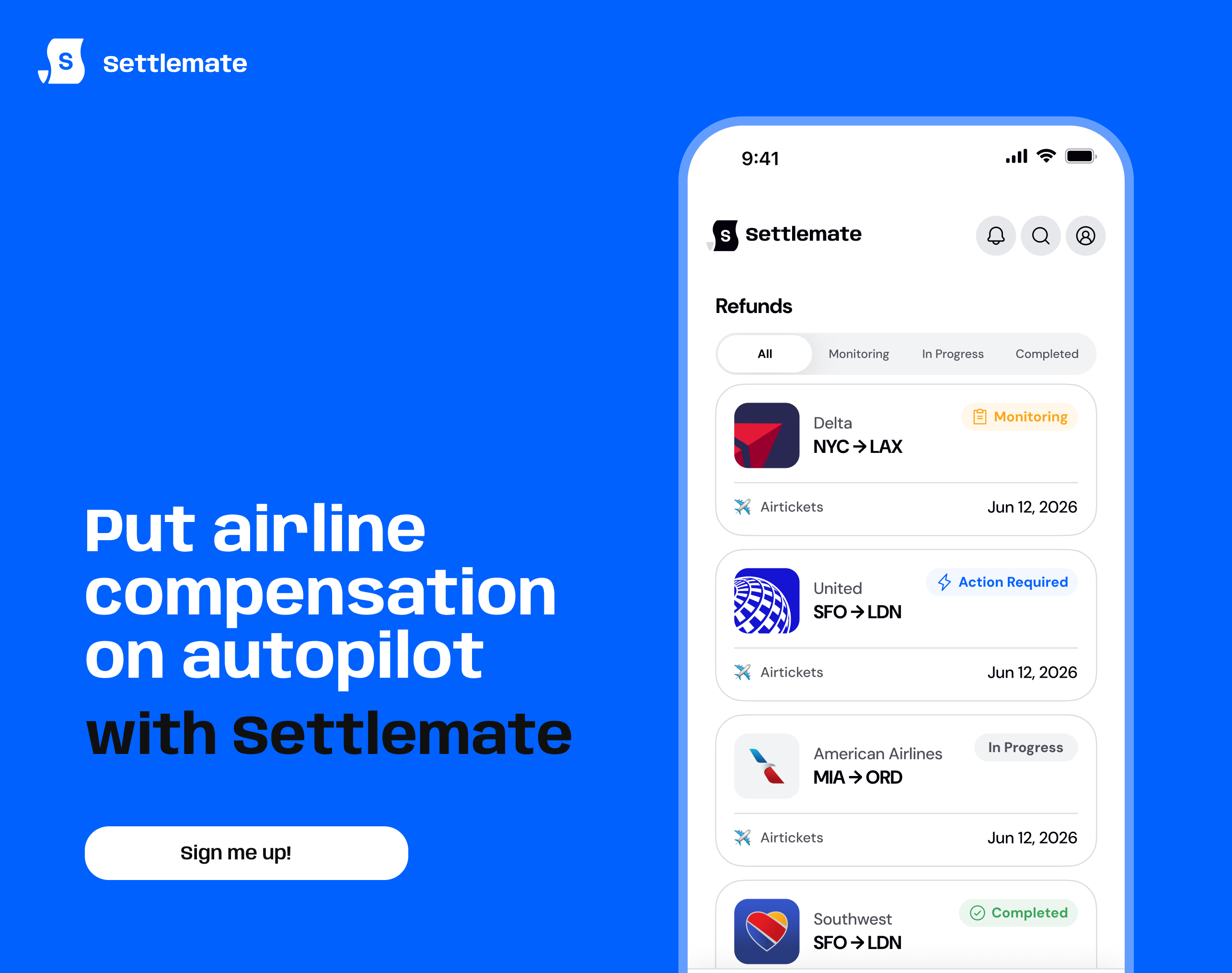
Whether your flight was delayed, diverted, or canceled, or your luggage went missing, Settlemate will go after the compensation you’re entitled to.
While you focus on getting home or exploring your new destination, the app works quietly in the background, catching eligible claims, checking the law, and submitting compensation requests on your behalf.
Here’s how Settlemate works in practice:
- Link your inbox: After you connect your email to Settlemate, it will scan your booking confirmations, flight notifications, and airline updates to detect disruptions.
- Settlemate checks if you qualify: When a diversion (or another disruption) happens, the app compares your situation against airline policies and passenger rights regulations to determine whether you have a valid claim and how much it’s worth.
- The app files your claim: Settlemate puts together everything the airline needs and submits the claim on your behalf. If your case requires additional information or documentation, the app asks you a few targeted questions to gather what’s necessary.
- Settlemate stays on it: If the airlines go quiet, deny claims without reason, or offer less than you’re owed, Settlemate will push back and keep the process moving until there’s a resolution you’re happy with.
- You get paid: Once approved, refunds or compensation land directly in your bank account.
Download Settlemate on the App Store or Google Play and let it handle flight compensations while you focus on what really matters.
Settlemate users are backed by a Value Guarantee. If you don’t recover your membership fee through verified value in the first 12 months, we’ll extend your membership for another year at no additional cost. We’ll continue extending your access until the cumulative value you receive matches your original subscription fee.
Frequently asked questions
Can I ask for a refund on a diverted plane ticket?
Yes, in some cases, you can ask for a refund after a flight is diverted. Under EC261, U.S. DOT, and Canadian APPR, if a diversion causes a long delay or major route change, and you choose not to travel, you can opt for a refund instead of rebooking.
What if I accept rerouting after a diversion?
If you agree to be rerouted on the next available flight at no extra cost, you generally waive your right to cash compensation. You’re still entitled to assistance like free meals or overnight accommodation if needed.
Can I claim both compensation and reimbursement?
In certain situations, you can claim both compensation and reimbursement. For example, under EC261, if your flight is significantly delayed or canceled, you may be entitled to a refund/reimbursement for expenses caused by the disruption, such as hotel or meal costs. At the same time, you can receive cash compensation for the inconvenience of the delay or diversion.
How different airlines handle flight compensations
Airlines’ individual policies play a huge role in whether you can get compensated for a disrupted flight. If you want to learn more about how airlines handle refunds and compensation in case of delayed or canceled flights, check out these guides: