

When your flight gets canceled and you’re suddenly stuck overnight, paying for a hotel out of pocket doesn’t seem right. It’s only natural to wonder if, in case of a canceled flight, hotel compensation is possible.
In some cases, airlines offer accommodation automatically. Other times, you’re left to figure it out on your own and try to reimburse the cost later.
In this guide, we’ll explain when airlines must provide hotel accommodation, when you might need to pay upfront, and how to claim that money back. You’ll also learn how Settlemate can make sure you never miss out on any airline compensation you’re entitled to.
Do airlines have to pay for a hotel if the flight is canceled?
In many cases, airlines are required to cover hotel accommodation if a canceled flight forces you to stay overnight. But whether they pay upfront or reimburse you later depends on which regulation applies to your flight and what caused the cancellation.
In the EU and Canada, for example, airlines have a legal duty of care, whether the cancellation was within their control or not. This means they must provide basic support during disruptions, which includes:
- Hotel accommodation
- Meals
- Transport to and from the hotel
- Basic communication
In the United States (U.S.), however, there’s no general legal requirement for airlines to provide hotel stays after cancellations, even when the airline is at fault. What you can receive depends on the airline’s own policy.
How different regulations handle hotel compensation for canceled flights
Different passenger protection regulations apply depending on where you’re traveling from. Here’s a quick overview of what you can expect in case of flight cancellations:
Important note: Hotel accommodation in the event of flight cancellations is usually guaranteed as a standard part of care. It’s not the same as compensation, which is the money you get on top of accommodation due to the inconvenience the cancellation or delay caused.
Does travel insurance cover hotel expenses after a canceled flight?
Travel insurance can reimburse hotel costs if your policy includes trip delay or trip interruption coverage. These benefits usually cover reasonable and necessary expenses, including hotel stays, meals, and sometimes transport.
For example, AXA reimburses accommodation, meals, and rebooking costs when a flight is canceled due to:
- Bad weather
- Mechanical issues or safety concerns
- Airline insolvency or bankruptcy
However, if the airline is legally required to provide a hotel, you’re expected to seek accommodation from the airline first.
Tip: Travel insurance policies often have daily limits and maximum payouts, so luxury hotels may not be fully reimbursed. Always check your policy limits before booking.
How to claim hotel compensation if your flight is canceled
If your flight is canceled and you need to stay overnight, the first step is to contact the airline, either at the airport or through their customer service, before booking anything yourself.
Here are some of the questions you should ask the airline:
- Will the airline provide a hotel for the cancellation?
- Is transport to and from the hotel included?
It’s always helpful to mention the applicable passenger rights regulations, which usually require the airline to provide a standard of care, including a hotel stay. If the airline offers accommodation, accepting it is often the easiest option.
If the airline refuses or can’t arrange accommodation, you can book your own hotel and claim reimbursement later. In this case, stick to what’s considered reasonable. For example, under the Montreal Convention, the airline can refuse to reimburse you for a luxury hotel stay if a mid-range option was available.
You must save all the receipts and documentation so you can file a claim later. This includes:
- Hotel receipts with date and price
- Transport receipts
- Meal receipts
- Boarding pass and booking confirmation
- Proof of cancellation
It’s also smart to get written confirmation from the airline explaining the reason for the cancellation.
Then, submit your reimbursement claim through the airline’s website, email, or customer service. Be prepared to follow up with additional documentation if needed.
Bonus read: Find out what your rights are in case a canceled or delayed flight caused you to miss a connection — you may be entitled to further compensation.
Why is claiming reimbursements or compensation so frustrating?
Passenger rights might seem clear on paper, but claiming hotel reimbursement or any disruption-related payout often turns into a slow, confusing process that most people give up on before seeing results.
There are a couple of usual reasons for this:
- Airlines don’t make your rights obvious: The information exists, but it’s often buried in policy pages, legal language, and region-specific rules. Unless you know what applies to your flight, it’s easy to miss what you’re entitled to.
- The claims process is tedious: Most airlines require you to fill out long forms, upload multiple documents, and categorize your claim correctly. If you reference the wrong regulation or miss a required detail, your request can be delayed or outright rejected.
- Automated rejections are common: Airlines often rely on templated responses to deny claims quickly. Even valid claims can get dismissed if they don’t match the system’s expected format.
- Delays are standard: Weeks or even months can go by without updates. Following up requires time, persistence, and patience.
- “Extraordinary circumstances” is often used loosely: Airlines can avoid responsibility by blaming events or circumstances beyond their control without specifying exactly what went wrong.
All of this creates friction by design: the harder it is to claim compensation or reimbursement, the fewer people bother to follow through.
On top of that, when your flight gets canceled, you may also be eligible for flight cancellation compensation. For example, EC261 specifically mandates compensation for canceled or delayed flights if the disruption was within the airline’s control. You might miss this and leave money on the table without even realizing it.
An app like Settlemate detects opportunities like this and handles the entire process end-to-end, making sure valid claims don’t fall through the cracks and you get the compensation you deserve.
How Settlemate streamlines flight compensation claims
If you’re stuck overnight after a flight cancellation, Settlemate makes sure you don’t miss out on hotel accommodation or reimbursement you’re entitled to under the law.
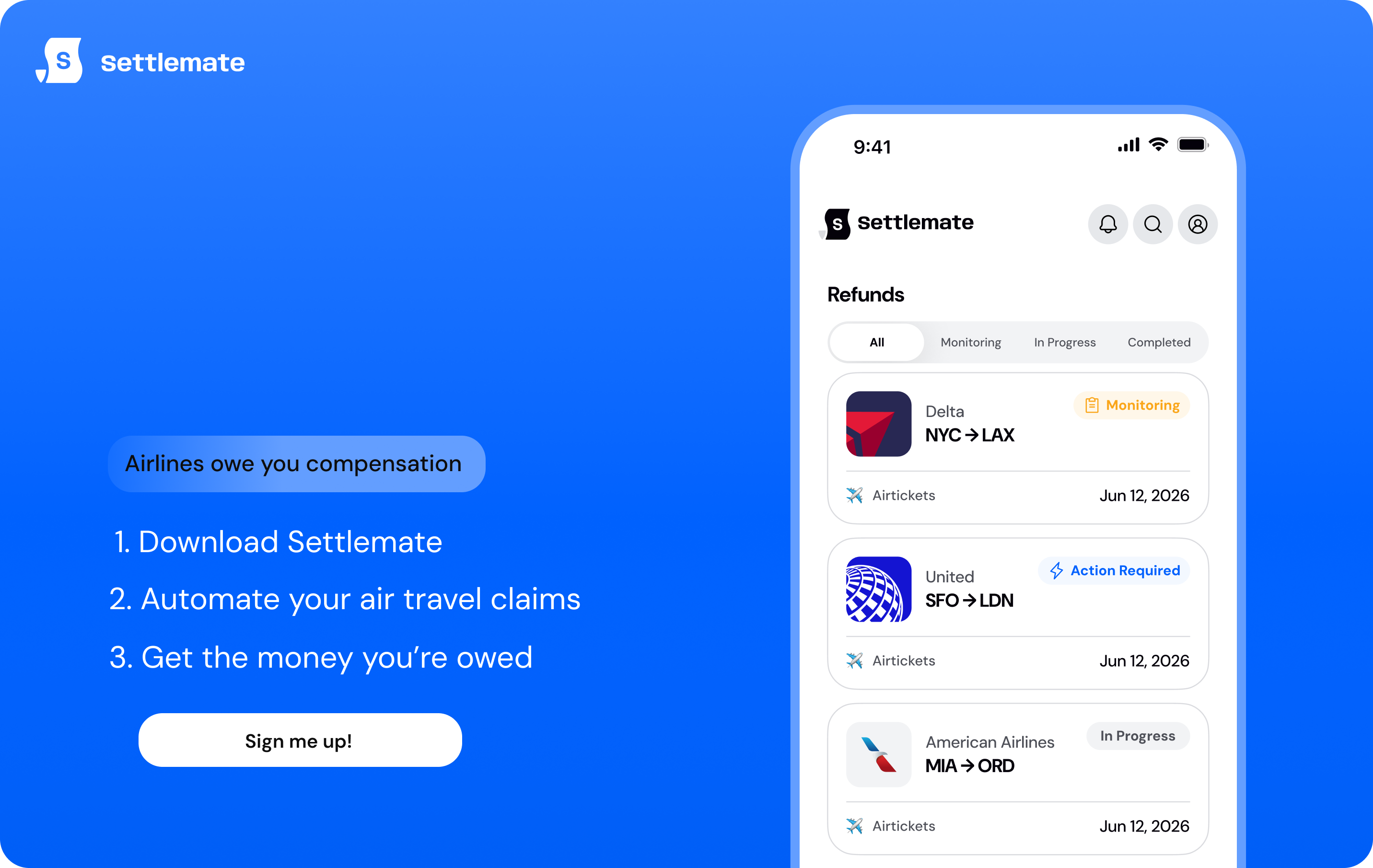
Here’s how it works in practice:
- Connect your inbox: Settlemate automatically scans your booking confirmations and flight updates to detect disruptions like cancellations, delays, diverted flights, or schedule changes.
- Eligibility check: The app evaluates the disruption, applies the relevant regulations, and checks airline policies to determine whether you have a valid claim and estimate its value.
- Filing the claim: Settlemate prepares and submits everything the airline needs automatically. If anything is missing, it asks for a quick input.
- Follow-up and pushback: If the airline delays, denies, or underpays, Settlemate steps in, escalates when necessary, and keeps the process moving until you get the outcome you deserve.
- Get your money: Once approved, your compensation or reimbursement is paid directly to you.
Get started with Settlemate today. Download the app from the App Store or Google Play and let it handle all your airline compensation claims for you.
There’s little risk in trying Settlemate thanks to our robust Value Guarantee. If your membership doesn’t deliver enough verified value to cover what you paid in your first 12 months, we’ll give you more time with complimentary extensions until you reach that value.
How different airlines handle reimbursements and compensations
The reimbursement and compensation process also depends on the airline you’re flying with. Guides below explain what you can expect from different carriers: