Imagine finding out that your internet or phone provider could lower your monthly bill without you having to spend an hour arguing with customer service. That’s the idea behind Rocket Money’s Bill Negotiation feature. The company’s team contacts providers on your behalf and tries to secure a better rate.
Sounds like an easy win? Not necessarily. Rocket Money bill negotiation reviews reveal both successful savings and serious customer complaints, including reports of questionable tactics that left some users feeling they had paid more than they bargained for.
We took a closer look at what happens when you let Rocket Money negotiate your bills and whether the service delivers on its promises. You’ll also find out how Settlemate approaches bill negotiations and how it can help you uncover more savings.
What is Rocket Money?
Rocket Money is a personal finance app that helps you manage your money, track spending, identify recurring expenses, and uncover savings opportunities. Its bill negotiation service is just a part of a much broader financial management platform.
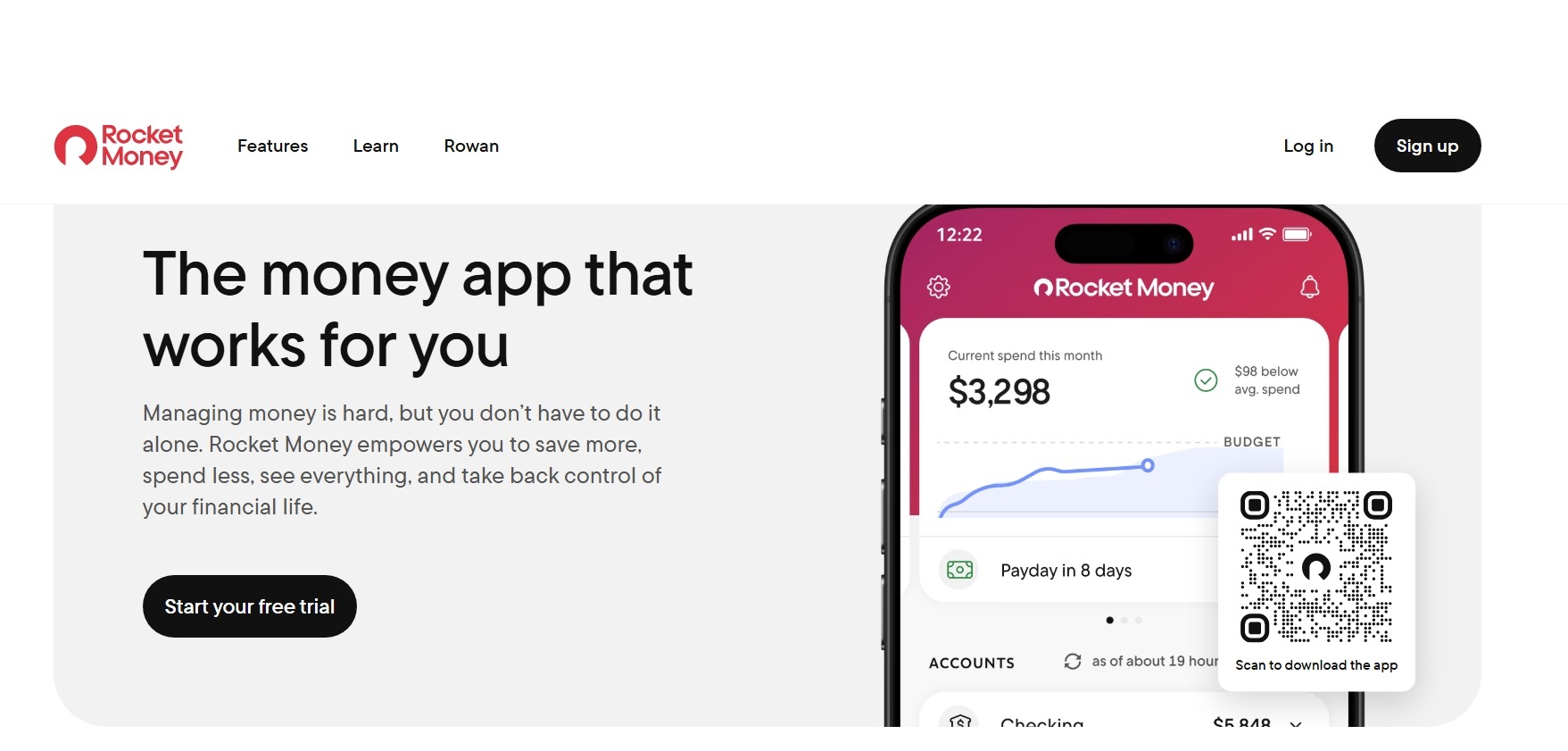
At its most basic level, Rocket Money lets you:
- Connect financial accounts
- Track spending
- Manage subscriptions
- Monitor account balances
Its premium membership unlocks more advanced tools, such as credit monitoring and net worth tracking.
Here’s an overview of Rocket Money’s main features and what each one does:
Rocket Money bill negotiation review: Key aspects to consider
Rocket Money’s broader range of financial tools provides useful context, but this review focuses specifically on its Bill Negotiation service.
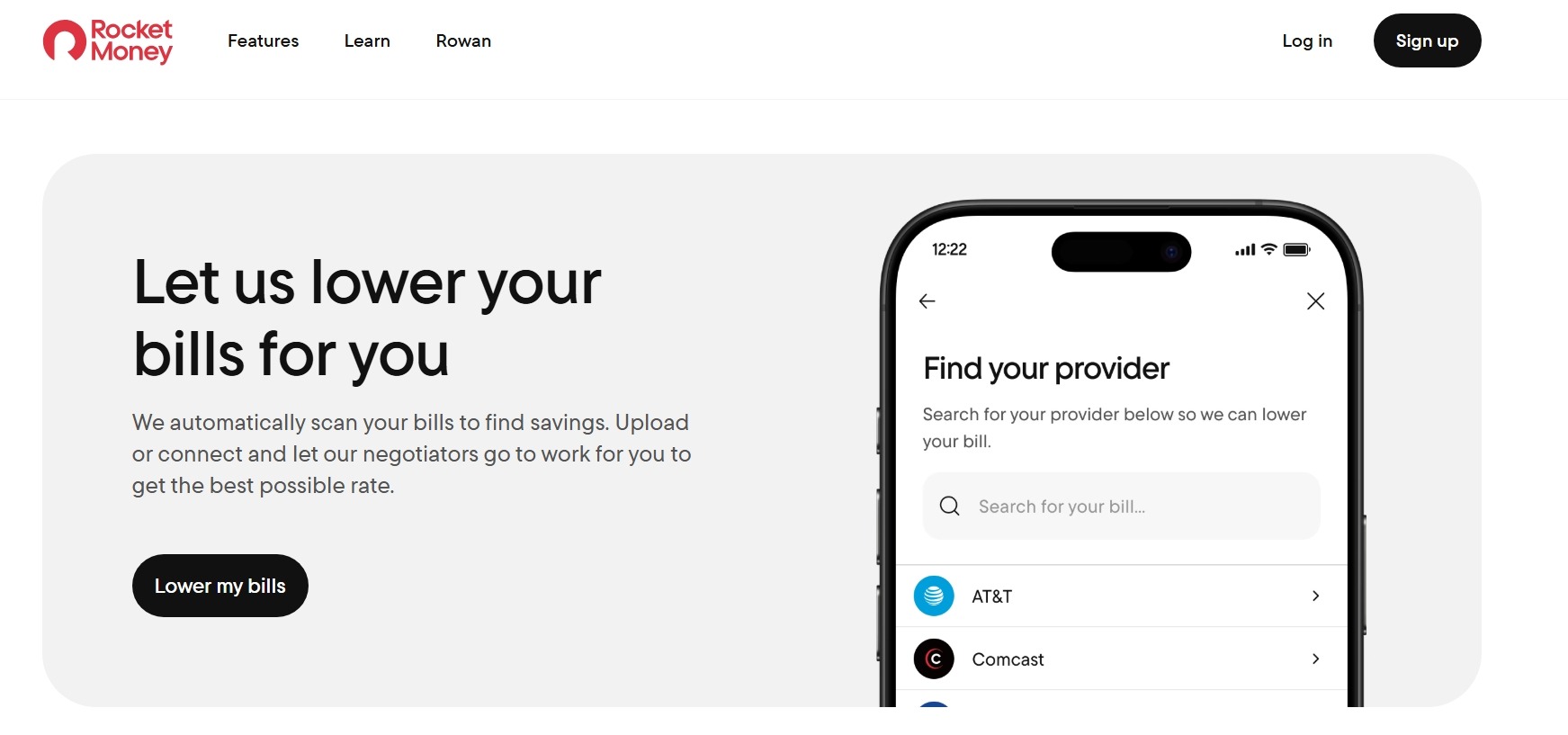
To determine whether the service offers good value and whether you can trust it to handle your bills, we’ll look at five key areas:
- How the Rocket Money Bill Negotiation feature works
- Where Rocket Money can help you save
- How much Bill Negotiation costs
- How safe using the service is
- What Rocket Money bill negotiation reviews reveal
How does the Rocket Money Bill Negotiation feature work?
Bill negotiation with Rocket Money is quite hands-off. You start by creating a Rocket Money account:
- Provide your name and email address.
- Select the feature(s) you want to use and your financial goals (e.g., grow savings, reduce spending, pay off debt, etc.).
- Link your checking and credit accounts.
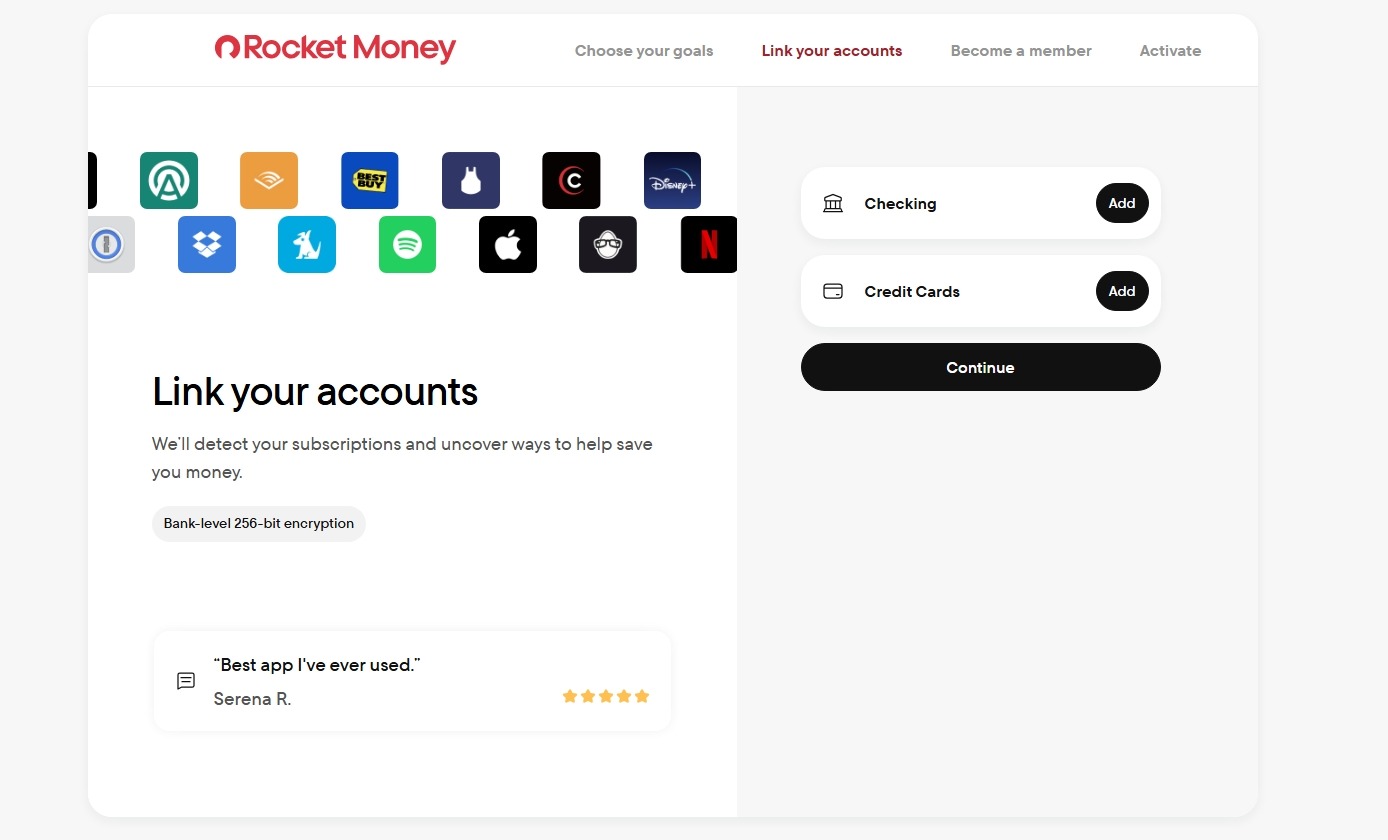
Once logged in, you’ll proceed to a dashboard where you can select the Lower Bills option, choose your provider, and connect your provider account by supplying information such as:
- The account holder’s name
- Your name and your relationship to the account holder (if applicable)
- Address
- Phone number
- Email address
- Service provider
- Provider account number, password, PIN, or other security credentials to access the account
- Copy of the current monthly billing statement
Note: The billing statement must show the products and features you receive from the provider, as well as the amounts you’re billed. You can either upload a photo of the bill or let Rocket Money access your online bill via a third-party provider.
Rocket Money may ask for additional details, such as whether you plan to cancel the service or switch providers.
Your submission authorizes Rocket Money to contact your provider and negotiate on your behalf. It reviews your current plan and looks for available discounts, promotions, or credits that can reduce your bill.
The company says that most negotiations last about two weeks, and it usually takes one or two billing cycles for the negotiated savings to appear on your billing statement. It also says it keeps you updated and sends confirmation once negotiations are complete.
Where can Rocket Money help you save?
Rocket Money can negotiate several common recurring household bills. According to the company, its negotiators can work with most major service providers in the following categories:
- Cable and satellite TV subscriptions
- Internet and phone plans
- Home security and monitoring services
- Satellite radio subscriptions
You can submit multiple bills for negotiations, but each bill is assessed and handled separately.
Note: Rocket Money says it aims to lower your costs without removing features or downgrading your service unless you approve it. This means a successful negotiation isn’t supposed to come at the expense of services or features you want to keep.
How much does Bill Negotiation cost?
Rocket Money’s bill negotiation service essentially works on a no-win, no-fee basis: if negotiations are unsuccessful, you pay nothing. However, the final cost depends on your membership tier.
There are three available plans:
Premium+ subscribers don’t pay a separate bill negotiation fee, while users on the other plans can choose a success fee ranging from 35% to 60% of the savings achieved over 12 months.
Example: Suppose Rocket Money reduces your bill by $25 per month. Over 12 months, that amounts to $300 in savings. At a 35% fee, you would pay $105, leaving you with $195 in savings. At a 50% fee, you would pay $150 and keep $150.
The fee is charged based on the 12-month savings, even if Rocket Money negotiates a longer-term rate.
The company can also negotiate to prevent your current rate from increasing if it discovers that your bill is about to rise. For example, if your provider plans to increase your bill from $100 to $120 a month, and Rocket Money manages to keep it at $100, the company treats the avoided increase as savings and charges its standard negotiation fee.
We like the ability to choose your own fee because it gives you some control over how much you pay. Still, even the lowest option can eat up a substantial portion of your savings.
How safe is using the service?
Because Rocket Money needs access to your provider account to negotiate your bill, security is a legitimate concern.
The company says it takes several measures to protect users’ financial information:
- Bank-level encryption: Data sent between your device and Rocket Money is protected with TLS, while any data stored on its servers is encrypted using 256-bit AES.
- Third-party account connections: When you connect your bank account, Rocket Money says your banking username and password are handled directly by Plaid and aren’t stored or accessible by Rocket Money.
- Security testing: The company says its security practices are routinely evaluated by independent third-party auditors and that it maintains a bug-bounty program for security researchers.
- Multi-factor authentication: Plaid supports MFA methods used for banks, adding another layer of protection when you sign in.
- Account and data controls: You can unlink connected accounts to revoke access and request deletion of your Rocket Money account and associated data.
While this sounds encouraging, Rocket Money’s banking security practices don’t eliminate the need to trust the service with your provider credentials to negotiate bills. You need to allow a much higher level of access than when using the platform to track your spending.
What do Rocket Money bill negotiation reviews reveal?
Rocket Money has a 3.9/5 TrustScore based on more than 4,000 reviews. Positive reviews focus on the company’s wider service and commonly praise friendly, responsive, and helpful customer support. Rocket Money bill negotiation reviews are much more critical.
One Trustpilot reviewer reports unwanted charges when Rocket Money negotiated with Frontier. According to their account, a technician arrived at their home unexpectedly and uninstalled their phone. They also mentioned that the bill remained the same and that they had to contact Rocket Money repeatedly to resolve the issue.
One Redditor describes a situation in which Rocket Money reported $360 in annual savings on an AT&T bill, but the bill had actually increased. Another user reported that an AT&T representative believed Rocket Money’s negotiator was speaking as the account holder and had access to the customer's password. They were particularly concerned about the way the negotiation was handled:

Rocket Money acknowledges that a bill may temporarily increase after a successful negotiation because an existing promotion expires before the new rate takes effect, or due to prorated charges resulting from a change in the billing cycle. It also states it may upgrade a plan if doing so results in greater savings.
These explanations may offer some context, but they don’t eliminate the need for customers to monitor the process closely. Ultimately, this raises questions about how much control you really have once you hand over your account details. What should be a convenient, hands-off service can end up requiring additional oversight and follow-up on your part.
Still, it’s worth noting that Rocket Money responds to negative comments, inviting users to contact its team so the company can investigate and work toward resolution.
The verdict: Should you use Rocket Money to lower your bills?
Rocket Money’s Bill Negotiation service has some clear benefits, but there are also a few serious drawbacks to consider before signing up:
The biggest issue with Rocket Money is that it calculates its bill-negotiation success fee based on your projected 12-month savings. This means that a substantial portion of the savings can become an immediate expense, leaving you with less money than you might have expected.
A flat-rate subscription offers a more predictable alternative, although paying for Rocket Money’s Premium+ membership may not make financial sense if you don’t need its other features.
You may get more value from a service like Settlemate, which combines bill-saving opportunities with other ways to recover money you may already be entitled to.
Settlemate: More personalized bill negotiation and more saving options
Settlemate doesn’t treat every bill the same way. It first identifies which savings opportunities make sense for that particular expense and then builds a tailored action plan around them.
Depending on the type of bill, that could include:
- Negotiating a better rate
- Finding a cheaper plan
- Removing unnecessary fees
- Identifying discounts
- Exploring switching options
- Enrolling in assistance programs
- Arranging payment plans
- Disputing errors
You can also choose how involved you want to be, from following a self-service action plan to using a concierge service.
Settlemate's Bill Negotiation feature can work with information you enter manually, a bill you upload, or account details you provide. You remain in control of the process and the level of assistance you receive.
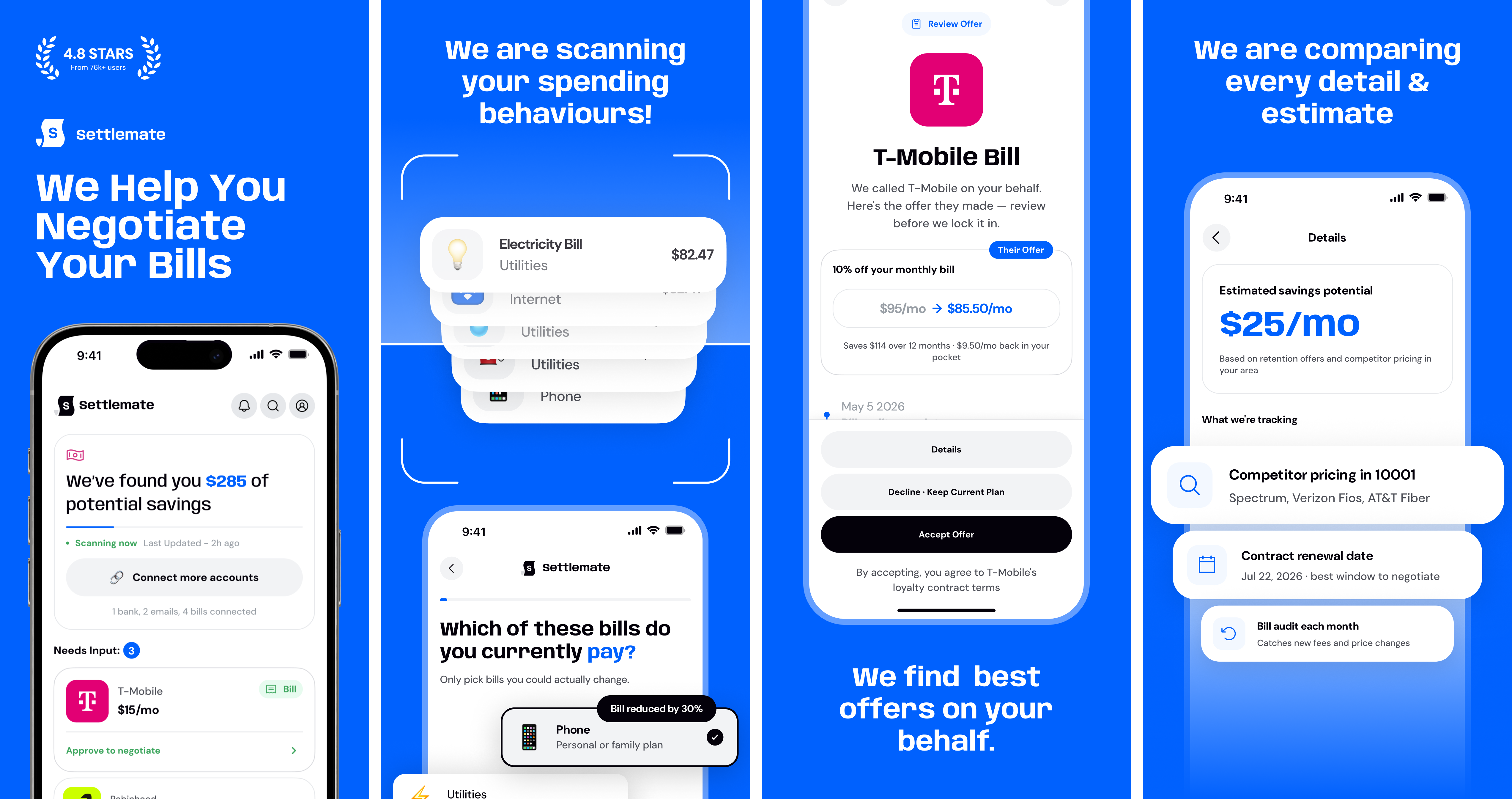
Settlemate will never take a cut of your savings. You pay a flat annual subscription fee, and whatever you save through bill negotiations stays yours entirely.
What’s more, that single subscription gives you access to several other money-recovery opportunities, including:
- Class action settlements
- Late delivery compensation
- Price drop refunds
- Flight disruption compensation
- Subscription management
Settlemate also stands behind the value of your membership. If you haven’t received verified value to cover your membership fees after a year, you’ll receive complimentary membership extensions until you do. You can learn more about how this works by checking Settlemate's Value Guarantee.
Sign up for Settlemate and start turning everyday bills and expenses into real savings opportunities.
You may also like…
Rocket Money isn’t the only service specializing in bill negotiation. Explore our reviews of similar apps and platforms to see what they offer and how they stack up: