

Let’s say you sign up for a buy-now-pay-later app to split a large purchase into smaller payments. The company promises no interest and transparent pricing, but you soon realize you’ve been charged recurring “processing fees” that were never clearly disclosed.
Because you weren’t the only one to experience this, a hidden fees class action quickly forms.
You try to join it, but then you find out you can’t.
Why? Because when you created your account, you agreed to a contract that waived your right to participate in a class action lawsuit.
That provision is called a class action waiver. And yes, it can prevent you from joining a class action, even when a company did you wrong.
So what is a class action waiver exactly, how does it work, and can it legally take away that right?
This guide has all the answers.
Key takeaways
- A class action waiver takes away your ability to sue as a group
By agreeing to a class action waiver, you give up the right to join a group lawsuit and must pursue any dispute on your own, even if thousands of people were affected the same way. - These waivers are common and often easy to miss
Class action waivers are frequently buried in terms of service, financial agreements, employment contracts, and leases, which means many people agree to them without realizing it. - Companies use waivers to reduce risk and control disputes
Waivers limit massive payouts, cut legal costs, keep disputes private, push cases into arbitration, and weaken consumer leverage by preventing people from banding together. - Class action waivers are legal, but not always unbeatable
Courts generally enforce them, especially when tied to arbitration, but waivers can sometimes be challenged based on how clearly they were disclosed, whether there was real consent, and whether basic contract principles were followed. - Waivers don’t eliminate class actions entirely, and that is where Settlemate helps
Even with waivers, many class actions and settlements still apply to consumers. Settlemate helps you stay informed, find the class actions you qualify for, and claim money you are legally owed without tracking lawsuits or handling paperwork yourself.
What is a class action waiver?
A class action waiver is a clause in a contract that takes away your right to join a class action lawsuit against a company. By agreeing to it, you’re saying that if there’s a legal dispute, you’ll handle it on your own, not as part of a group, even if thousands of other customers were affected in the exact same way.
These waivers are most commonly tucked into consumer contracts, though they also appear in other agreements, often as part of mandatory arbitration clauses.
Here’s where to look for this clause:
- Terms of service for apps and online platforms: Companies include class action waivers in the click-through agreements you accept to use apps, social media platforms, ridesharing services, and online marketplaces.
- Financial product agreements: Credit cards, bank accounts, loans, and buy-now-pay-later services frequently contain class action waivers to prevent customers from joining together over fees, billing practices, or disclosure issues.
- Subscription and retail services: Streaming platforms, e-commerce sites, gyms, and other subscription-based businesses often use these clauses to avoid collective lawsuits tied to recurring charges or cancellation practices.
- Employment contracts: Many employers require workers to sign arbitration agreements with class action waivers, meaning workplace disputes, such as wage or labor violations, must be handled individually rather than as a group.
- Housing and property management agreements: Large landlords and property management companies may include class action waivers in leases to keep tenant disputes out of court and out of the public eye.

In some cases, class action waivers are as hidden as the consumer rights violations they’re designed to shield, so if you don’t read the fine print, you likely won’t even know the waiver was there.
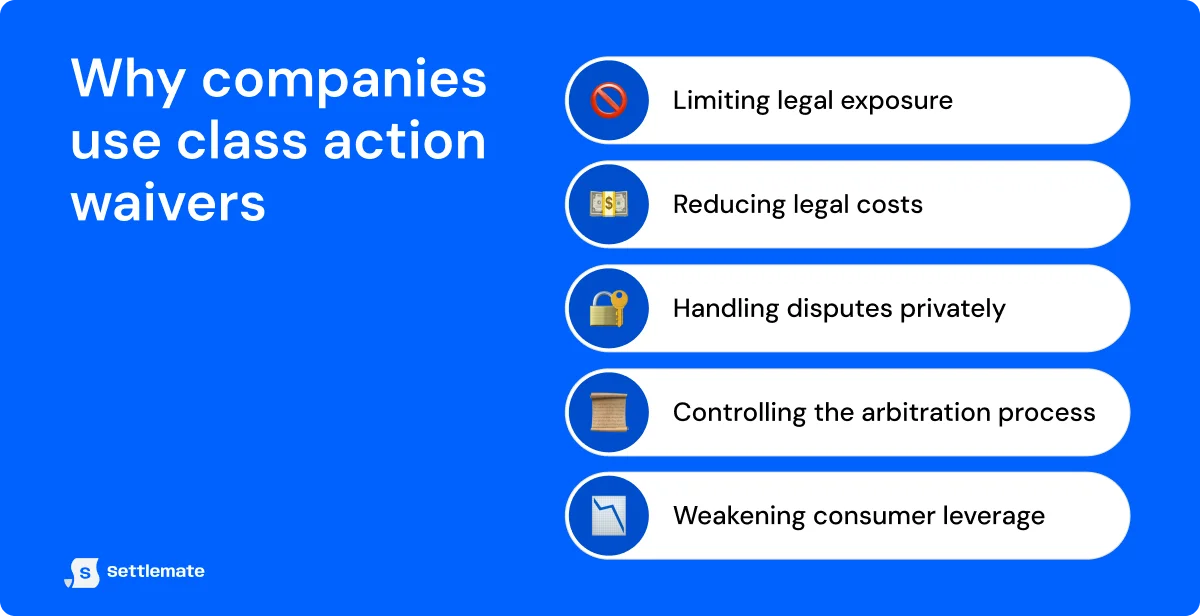
Why companies use class action waivers: 5 key reasons
At its core, a class action waiver exists to protect the company, not the consumer. Here’s what’s in it for them:
1. Limiting legal exposure dramatically
Class actions bundle thousands—or even millions—of similar claims into a single lawsuit. If the company loses that lawsuit, the damages can be massive.
For example, in September 2025, the FTC announced a $2.5 billion settlement over Amazon Prime’s alleged “subscription trap,” including $1.5 billion in consumer refunds and a $1 billion civil penalty.
That’s the nightmare scenario companies are trying to avoid with class action waivers.
The waiver’s purpose is to prevent claims from being aggregated, so even if the same issue affects a large number of people, the company faces individual disputes rather than a single blockbuster lawsuit.
The only exception is when some users never agreed to the waiver—for example, customers who signed up before the clause was added—allowing a class action to move forward on behalf of that group.
2. Slashing legal costs and time
Class action lawsuits are slow, complex, and expensive from day one.
Long before a verdict is ever reached, companies might be forced to:
- Spend years in litigation
- Pay millions in legal fees
- Comply with extensive discovery demands
- Divert internal resources to defend the case
Even when a company ultimately prevails, the process itself is draining, making class actions a financial risk that companies are eager to avoid.
3. Keeping disputes out of public courtrooms
Class actions are public. Arbitration is private.
Waivers help companies avoid headlines, reputational damage, and scrutiny from regulators, investors, and the press.
4. Forcing disputes into arbitration where companies control the process
Class action waivers are usually paired with mandatory arbitration clauses.
Arbitration lets companies steer disputes into a forum with different rules, limited discovery, and no jury, often making outcomes more predictable and easier to manage.
5. Weakening consumer leverage
One person fighting a company is much easier to ignore than thousands of them.
Class action waivers prevent that collective pressure by forcing everyone who signed the waiver to proceed individually.
Types of class action waivers
You’ll often see class action waivers tied to arbitration, but they can also stand alone. Here’s how each option works:
Arbitration-based class action waivers
In the most common setup, the class action waiver is bundled with a mandatory arbitration clause. Together, they require that disputes be resolved individually and outside of court.
So, instead of filing a lawsuit, you must bring your claim to arbitration, where the following typically applies:
- The process is typically less formal than a court.
- Discovery is limited.
- Proceedings are private.
- There is no jury.
- Appeal options are extremely narrow.
- The arbitrator is often selected through a process outlined by the company.
Essentially, this structure redirects disputes into a forum where companies face less public scrutiny and more predictable outcomes.
Standalone class action waivers
A standalone class action waiver removes the right to participate in a class action without requiring arbitration.
In other words, the contract may still allow disputes to be brought in court, but only on an individual basis.
Standalone waivers are more common—and more likely to be upheld—in commercial and business contracts, but they’re increasingly appearing in consumer and service agreements as well.
Arbitration-based vs. standalone class action waivers: A comparison
The table below helps you compare these two types of waivers and understand how each one affects your options:
How a class action waiver affects you
When you sign a class action waiver, you’re agreeing that if something goes wrong, you’ll have to deal with the company on your own.
That changes the balance of power.
Instead of being part of a group with shared legal costs, shared evidence, and real leverage, you’d be left to pursue a claim individually. That can mean:
- Filing alone in arbitration or court
- Covering your own costs
- Navigating the process without the support a class action provides
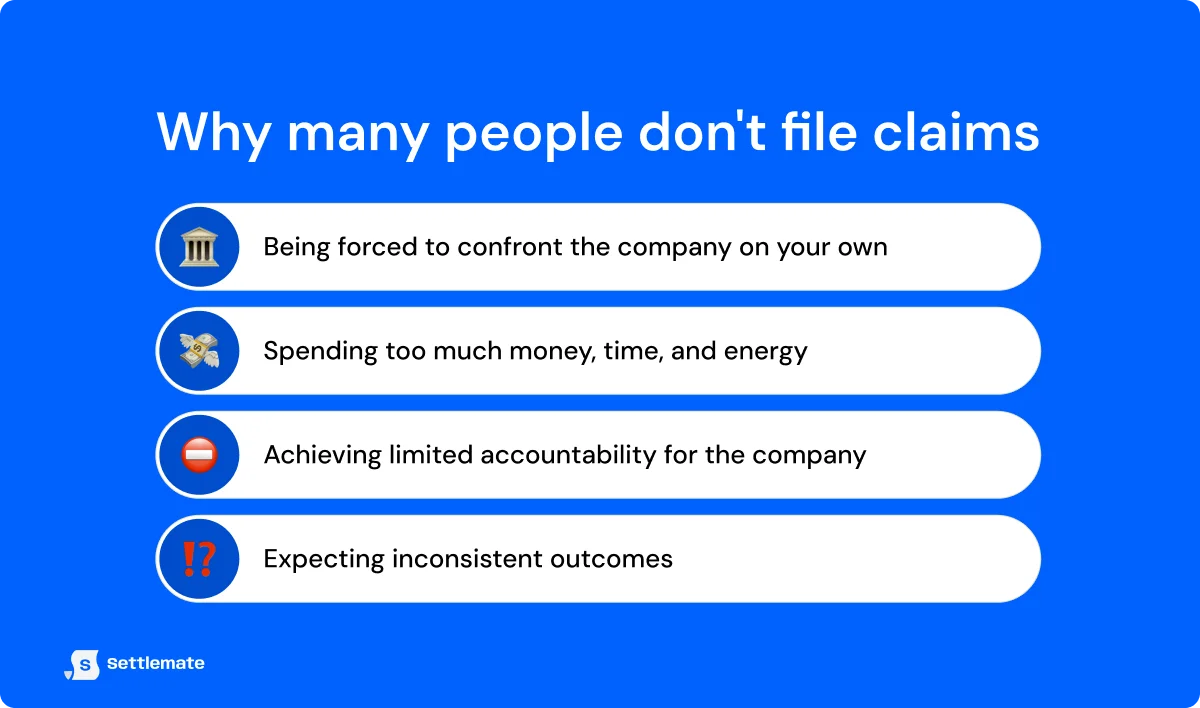
This makes pursuing an individual claim expensive and intimidating, especially if the amount you’re owed is relatively small. After all, that’s one reason class actions exist in the first place: They make it possible to challenge wrongdoing that wouldn’t be worth fighting alone.
Plus, when claims are handled one by one, decisions may differ from case to case, even when the facts are similar. That inconsistency can make it harder to know where you stand or what to expect.
For many people, these circumstances are enough to stop a claim before it even starts.
Are class action waivers legal?
Yes, class action waivers are legal in the United States.
Under US law, courts generally treat class action waivers as valid contractual terms, especially when they’re tied to arbitration agreements.
That said, legality and enforceability aren’t the same thing.
A waiver can be legal in theory, but still challenged in practice based on:
- How it was presented
- How clearly it was disclosed
- What the balance of power between the parties is
- Whether real consent existed
- Whether contract law standards were met
Still, it’s important to know that federal law strongly favors enforcement of arbitration contracts, and that legal framework has shaped how courts treat class action waivers for more than a decade.
The first major turning point came in AT&T Mobility LLC v. Concepcion, when the United States Supreme Court ruled that federal arbitration law overrides state rules that would otherwise invalidate class action waivers.
Subsequent decisions, such as American Express Co. v. Italian Colors Restaurant, reinforced that position, confirming that class action waivers are generally enforceable even when pursuing an individual claim may be impractical or costly.
In response, regulators and lawmakers have tried to rein in class action waivers.
In 2017, the Consumer Financial Protection Bureau issued a rule aimed at banning class action waivers in consumer financial contracts, but Congress overturned it later that year.
Since then, lawmakers have repeatedly introduced the FAIR Act, a bill that would restrict forced arbitration and class action waivers, though it still hasn’t been passed.
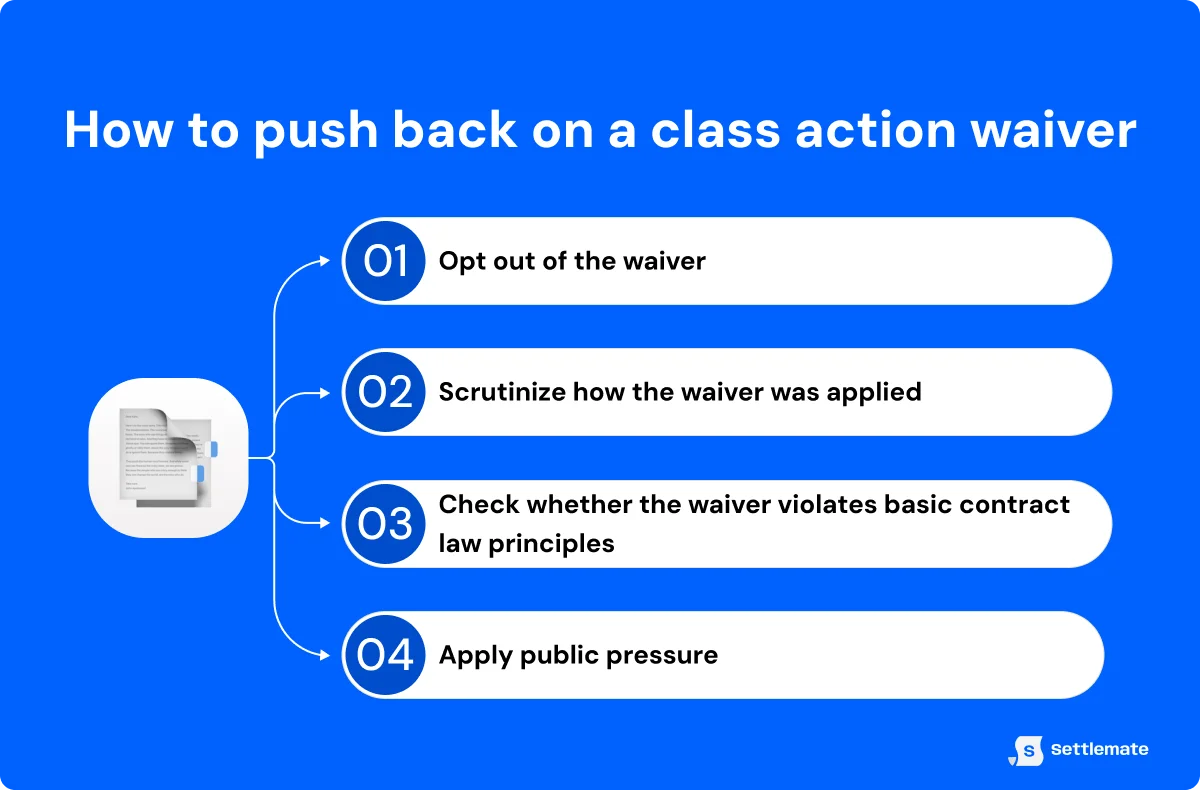
How to push back on a class action waiver: 4 possible paths
The most reliable way to avoid being boxed in by a class action waiver is to read contracts carefully and consult a lawyer before signing high-stakes agreements like employment offers, leases, or long-term financial products.
But most people don’t get that chance.
If you’ve already agreed to a waiver—or only discovered it after something went wrong—you’re not automatically out of options.
Here are the four main paths people use to challenge or limit the impact of a class action waiver:
1. Look for an opt-out window and use it
Some companies allow you to opt out of arbitration and class action waivers after you sign up, but only if you act quickly.
That’s because opt-out periods are usually short, often 30 to 45 days, while instructions are typically buried in the terms of service, making them easy to miss.
If you manage to spot the instructions on time, opting out typically requires sending a written notice digitally or physically.
2. Check whether you actually agreed to it
A waiver is only enforceable if you knowingly and affirmatively agreed to it.
Courts may scrutinize waivers in the following situations:
- The terms weren’t clearly disclosed.
- You weren’t required to review them before using the service.
- The waiver was hard to find or was only available through external links.
- You could use the product or app without ever seeing the agreement.
3. Pay attention to how the waiver is presented online
Courts tend to look more favorably on waivers when companies:
- Clearly communicate the terms
- Require users to scroll through the agreement
- Block access to the service until the terms are accepted
- Periodically require users to reconfirm their agreement
If those safeguards aren’t there, the waiver may be vulnerable to challenge under basic contract law principles.
4. Know that pressure sometimes works
Legal challenges aren’t the only way waivers get rolled back.
Employee backlash forced Google to abandon forced arbitration after public protests and walkouts over how misconduct claims were handled in private.
Public pressure, media attention, and collective action outside the courtroom can still move the needle, even when a waiver is technically enforceable.
What class action waivers don’t take away
After understanding what a class action waiver is, one thing is obvious: It shrinks your class action options.
However, they don’t eliminate them altogether, and that’s why Settlemate exists: To make sure you don’t lose the ones you still have.
Settlemate automatically finds and helps you claim money you’re legally owed from class action settlements, product recalls, and similar refund opportunities without requiring legal knowledge or manual effort.
Here’s what that looks like in practice:
- Finding class actions you qualify for automatically: Settlemate matches your purchases and activity against open settlements, so you don’t have to track lawsuits or read legal notices.
- Handling claims end to end: The app scans emails and receipts, fills out claim forms, and submits them for you.
- Keeping you from missing deadlines: The app tracks claim status and alerts you when new settlements or refund opportunities open.
Download Settlemate on the App Store or Google Play to stay informed when class actions are still available and collect what you’re owed.