



When someone with life insurance dies, the insurer pays out a death benefit to the beneficiary.
Death benefits per capita vary widely by state, with averages ranging from $66,000 in Alabama to $291,000 in Alaska. But how much money beneficiaries ultimately receive also depends on the settlement option they choose, not just the size of the policy.
While there are several life insurance settlement options available, not all of them guarantee payments for life. Some end on a fixed schedule, while others stop once the funds are exhausted.
So, which life insurance settlement option guarantees payments for life?
Key takeaways
- Life insurance settlement options control how you get paid, not whether you get paid
Once a claim is approved, the settlement option only determines the payout structure. It affects timing, income style, and guarantees, but it doesn’t affect claim approval or the insurer’s obligation to pay. - The life income option is the only one that guarantees payments for life
Life income converts the death benefit into payments that last as long as the beneficiary lives. If the beneficiary dies early, payments stop, and no remaining balance passes on. - If you want lifetime income and protection for heirs, there is a hybrid option
Life income with period certain guarantees payments for life, and also guarantees a minimum payout period. If the beneficiary dies early, remaining payments go to a contingent beneficiary or the estate. - Other settlement options prioritize flexibility over guarantees
Lump-sum, interest-only, fixed-period, and fixed-amount options can offer control, short-term income, or predictable cash flow, but none guarantee income for life. Each comes with trade-offs around longevity risk, taxes, and spending discipline. - When insurers get it wrong, you may be owed money
Insurance companies sometimes underpay or mishandle claims, leading to class action settlements. Many people miss out simply because they never knew they were eligible. Settlemate solves this by automatically finding settlements, filing claims for you, and tracking payouts so you don’t leave money on the table.
What is a life insurance settlement?
A life insurance settlement is the method used to pay out a policy’s death benefit after the insured person dies. This method only determines how the money is paid, and not:
- Whether a claim is approved
- Whether the insurer can deny payment
- Whether the beneficiary can lose the benefit
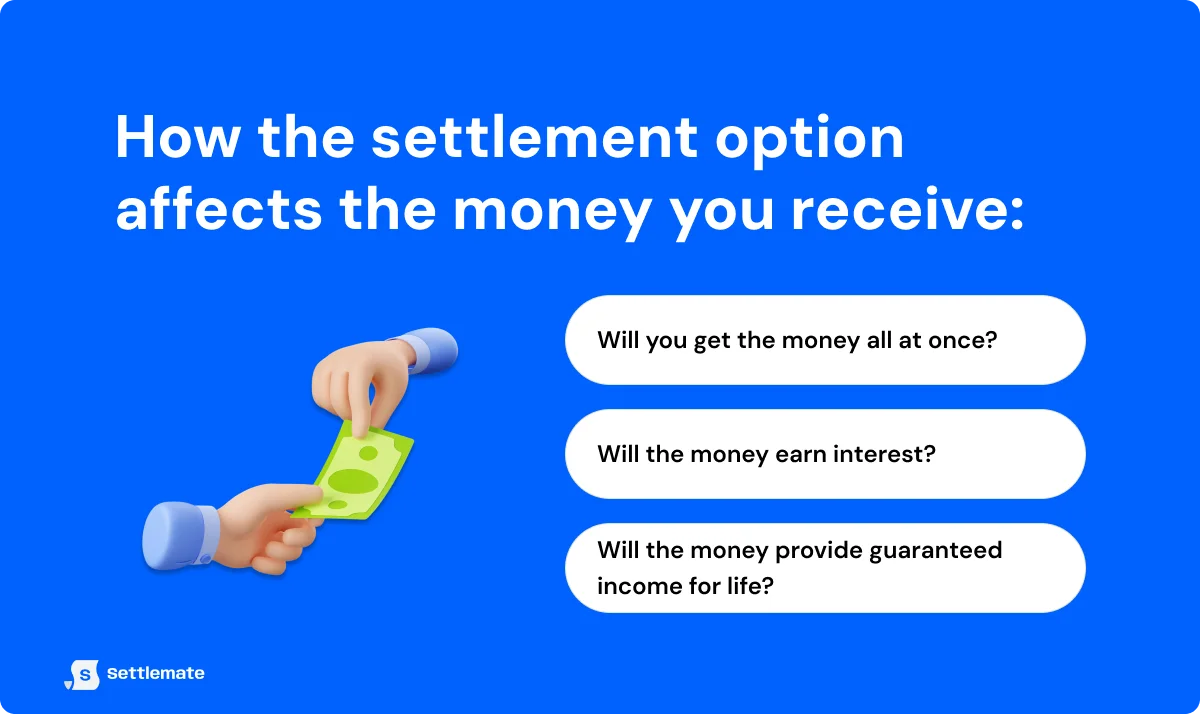
The settlement option beneficiaries choose determines whether the money arrives all at once, earns interest, or provides guaranteed income for life.
Which life insurance settlement option guarantees payments for the lifetime of the recipient?
The life income settlement option, also known as a life annuity or life-only income, is the only option that guarantees payments for life.
Once this option is selected, the insurance company converts the death benefit into regular payments that continue for the rest of the beneficiary’s life, no matter how long they live.
The amount of each payment is set by the insurer based on:
- The beneficiary’s age
- The beneficiary’s life expectancy
- Interest assumptions at the time of payout
Once payments begin, the option usually can’t be changed or withdrawn as a lump sum anymore.
Life income is best suited for beneficiaries who prefer certainty and longevity, not flexibility. It trades access to a large upfront payment for predictable income that won’t run out. Keep in mind that losing access to a large sum of money isn’t the only trade-off, though.
If the beneficiary dies sooner than expected, payments stop, and any remaining value typically stays with the insurer.
In other settlement options, dying early usually redirects any unpaid balance to a contingent beneficiary or the beneficiary’s estate.
If you want guaranteed lifetime payments and the ability for remaining payments to continue after the beneficiary’s death, there is an option that combines both features: life income with period certain.
This option guarantees income for the beneficiary’s lifetime, while also guaranteeing payments for a minimum fixed period, such as 10 or 20 years. If the beneficiary dies earlier than expected, the payments continue until that guaranteed period ends.
The table below compares the life income and life income with period certain so you can see exactly how their guarantees differ.
4 other life insurance settlement options to consider
As of December 2025, there are roughly 134 million individual life insurance policies in force in the US, but far fewer policies ever reach the payout stage.
Between 85% and 88% of life insurance policies lapse, expire, or are surrendered before a death benefit is paid.
For the smaller percentage of policies that do result in a payout, the most common settlement option is a lump sum. However, this isn’t the only choice.
Here are four other life insurance settlement options at your disposal if you decide that long-term guaranteed payments aren’t the right fit.
1. Lump-sum payout
A lump-sum settlement option pays the entire death benefit at once after the claim is approved.
Once the insurer transfers the funds, the money is fully in the beneficiary’s control.
This option is well-suited for individuals who want maximum flexibility or have immediate financial needs, such as:
- Paying off a mortgage
- Covering funeral expenses
- Eliminating debt
This option also makes it easy to save or invest money right away, without restrictions on timing or withdrawals.
In this case, any future income depends entirely on how the beneficiary manages the money, since the insurer has no ongoing payment obligation once the lump sum is paid.
2. Interest-only settlement
An interest-only settlement option pays out just the interest earned on the death benefit, while the insurer holds the principal.
In this setup, the death benefit itself stays intact with the insurance company. The beneficiary receives periodic interest payments and can usually withdraw some or all of the principal later if needed.
This option is typically used by beneficiaries who:
- Want temporary or supplemental income
- Don’t need the full death benefit right away
- Prefer to delay a larger financial decision

However, this option comes with certain trade-offs you should be aware of:
- Interest payments depend on the insurer’s credited rate, which can change over time.
- Only the interest is paid automatically, meaning this option doesn’t guarantee long-term income.
- Interest payments may be taxable, unlike the death benefit itself, which can reduce the net value received.
3. Fixed-period payments
With a fixed-period settlement, the insurer pays out the death benefit in regular installments over a set period, such as 10, 20, or 30 years. Once that period ends, payments stop, even if the beneficiary is still alive.
This settlement option is often used by beneficiaries who want structured, predictable income for a defined time frame, usually for temporary financial needs, such as:
- Replacing lost income for a number of years
- Covering mortgage or rent payments until a loan ends
- Funding education or childcare costs with a known end date
The payments themselves include both principal and interest and are sent out according to a predetermined schedule.
4. Fixed-amount payments
Choosing a fixed-amount settlement means receiving a set dollar amount on a regular schedule, usually monthly, quarterly, or annually.
Instead of choosing how long payments last, the beneficiary chooses how much they want to receive each period. The payment schedule continues until the money runs out.
This option is commonly used by beneficiaries who want:
- Predictable cash flow for ongoing expenses
- Control over the payment size rather than the timeline
- A middle ground between a lump sum and a lifetime income
How to choose the right life insurance settlement option
Not everyone needs the money in the same way or during the same period. Here are a few practical tips to help you choose the right option for you:
- Consider the outcome you want: Decide whether the death benefit should provide lifetime income, cover expenses for a set number of years, or be fully accessible right away.
- Match the payout to your financial discipline: If managing a large sum feels overwhelming, structured payments can reduce the risk of spending the money too quickly.
- Be honest about your cash-flow needs: Ongoing expenses, lost income, or upcoming obligations may favor installment-style payouts over a lump sum.
- Account for taxes before you decide: While death benefits are generally tax-free, interest or earnings generated under certain settlement options may be taxable.
- Get advice before you lock it in: A financial advisor can help you pressure-test each option against your broader financial plan before making a permanent choice.
What to do when insurance companies get it wrong
Looking into which life insurance settlement option guarantees payments—and choosing the right one for you—assumes the insurance company handled everything correctly. Unfortunately, that isn’t always the case.
In reality, insurance companies sometimes make mistakes, apply policy terms unfairly, or systematically underpay claims.
When those errors affect one person, they’re often hard to fight. However, when they affect thousands of policyholders in the same way, that’s where insurance class actions come into play.
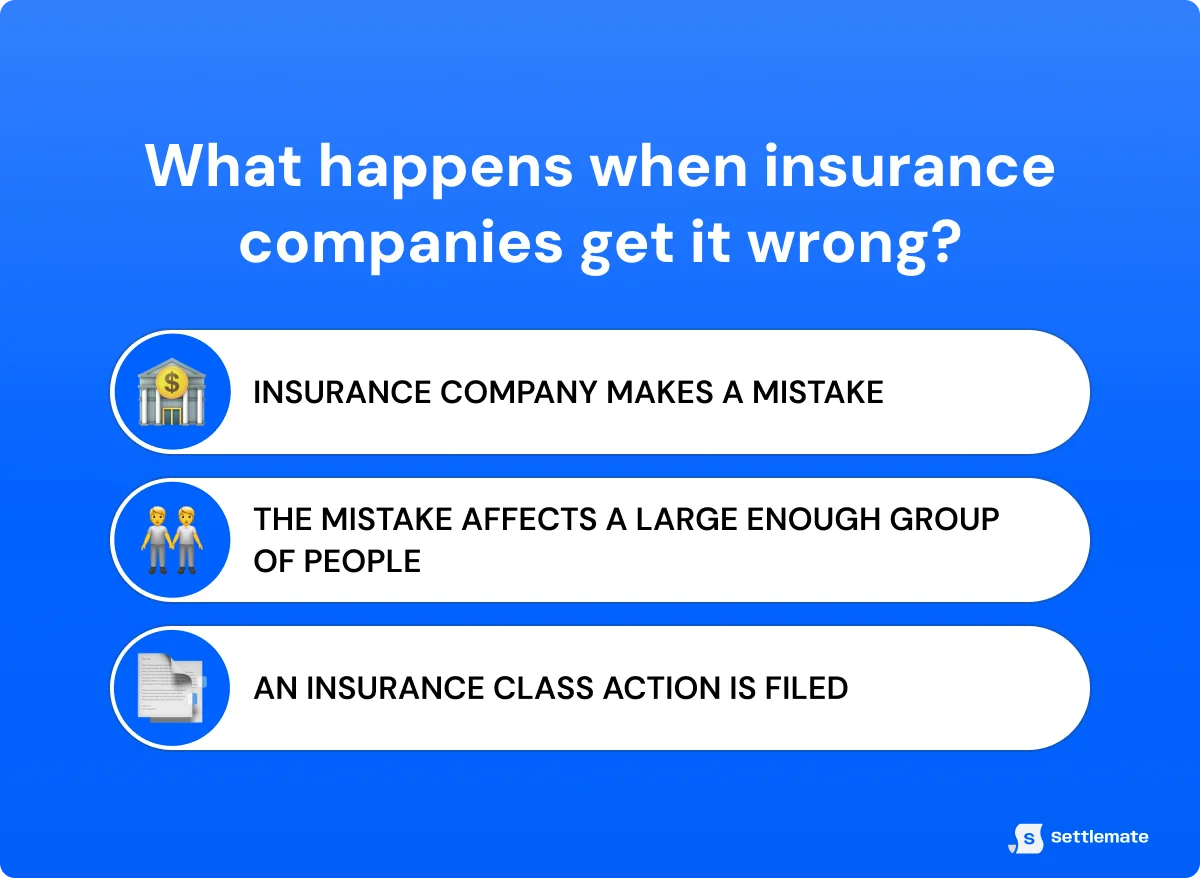
In these situations, policyholders usually don’t have to make complex decisions or hire lawyers on their own. They’re often automatically included as a potential class member in the case.
The bigger problem here is awareness.
Many people never realize a settlement exists, miss the filing window, or don’t know they’re eligible in the first place. As a result, money that’s already been set aside for consumers often goes unclaimed.
That’s what Settlemate prevents from happening by:
- Finding settlement claims you may be eligible for automatically
- Letting you file claims directly from your phone without lawyers or paperwork
- Tracking your claims in real time, so you know what’s pending, approved, or paid
- Sending alerts when new settlements open or deadlines are approaching
If you’ve ever had an insurance claim underpaid, denied unfairly, or handled incorrectly—and want to make sure you don’t miss out when companies are held accountable—get Settlemate on the App Store or Google Play and let it track eligible settlements for you automatically.