

The video gaming industry is pulling in an estimated $188.8 billion in 2025. As profits climb, the players are absorbing the damage at home.
Research puts gaming addiction at 1.7% to 10% of the U.S. population. Even the low end equals millions of people, making this problem too big to write off.
That’s why a growing number of players, families, and lawyers are calling out the industry and taking those claims straight into court.
If you or someone you love is thinking of doing the same, this article breaks down everything you need to know about video game addiction lawsuits.
Key takeaways
- Gaming addiction lawsuits focus on deliberate design, not “too much play”
Major developers are being accused of using psychological tactics, reward loops, and predatory monetization systems that push minors toward compulsive gaming. These cases argue the harm is engineered, not accidental. - Eligibility centers on young players who show addiction-related harm
Most firms look at age, daily playtime, loss of control, mental or physical symptoms, and excessive in-game spending. A formal diagnosis helps, but it’s not required to get started. - Several major game companies appear repeatedly in lawsuits
Studios like Epic, Roblox, Microsoft, Rockstar, Activision Blizzard, and Ubisoft face the most scrutiny because their games rely heavily on microtransactions, social pressure, or endless progression systems. - Settlements depend on the severity and impact of the addiction
Payouts vary widely, but stronger cases involve documented medical treatment, academic or career disruption, large financial losses, or long-term mental health effects. More serious harm typically leads to higher compensation. - You can prepare early by using a tool that tracks class actions for you
Settlemate monitors emerging cases, matches you to eligible settlements, and lets you file claims directly from your phone so you never miss money you’re owed.
Video game addiction lawsuit: The basics
Video game addiction lawsuits are legal claims brought by players and families who argue that major gaming companies went beyond creating entertainment. Instead, they used deliberate design choices and business practices to create products that can cause addiction, especially in minors.
The goal of a video game addiction lawsuit is simple: to hold gaming companies accountable for these choices and for putting profit over player safety.
What do video game addiction lawsuits allege?
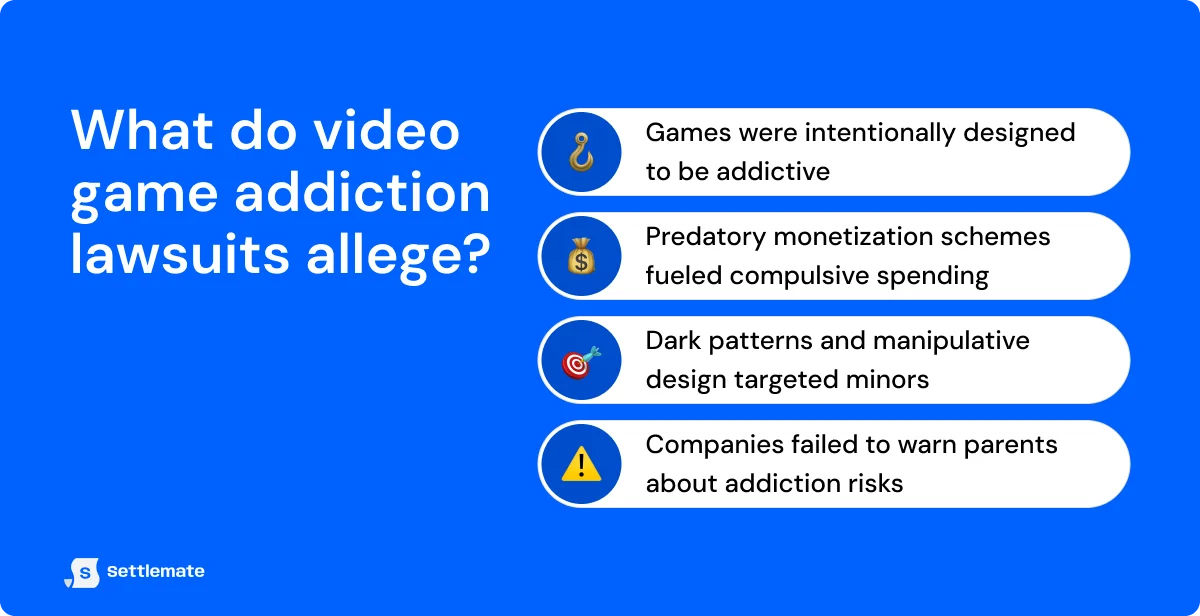
Video game addiction lawsuits allege that major developers engineered addictive systems, targeted young players, and profited from the real-world consequences.
Most claims fall into four core categories:
1. Games were intentionally designed to be addictive
Plaintiffs in video game addiction lawsuits argue that companies used behavioral psychology, feedback loops, and reward schedules to keep kids playing for long stretches. To achieve this outcome, the companies:
- Hired psychologists and neuroscientists to optimize engagement
- Patented technologies meant to maximize playtime
- Introduced dynamic difficulty or reward systems that adapt to keep players hooked
2. Predatory monetization schemes fueled compulsive spending
Many modern games make money through microtransactions—small in-game purchases for things like skins, upgrades, power-ups, or surprise “mystery boxes.”
Video game addiction lawsuits argue these features weren’t just add-ons, but details deliberately structured to feel like gambling and trigger impulsive spending.
Examples of these predatory practices include:
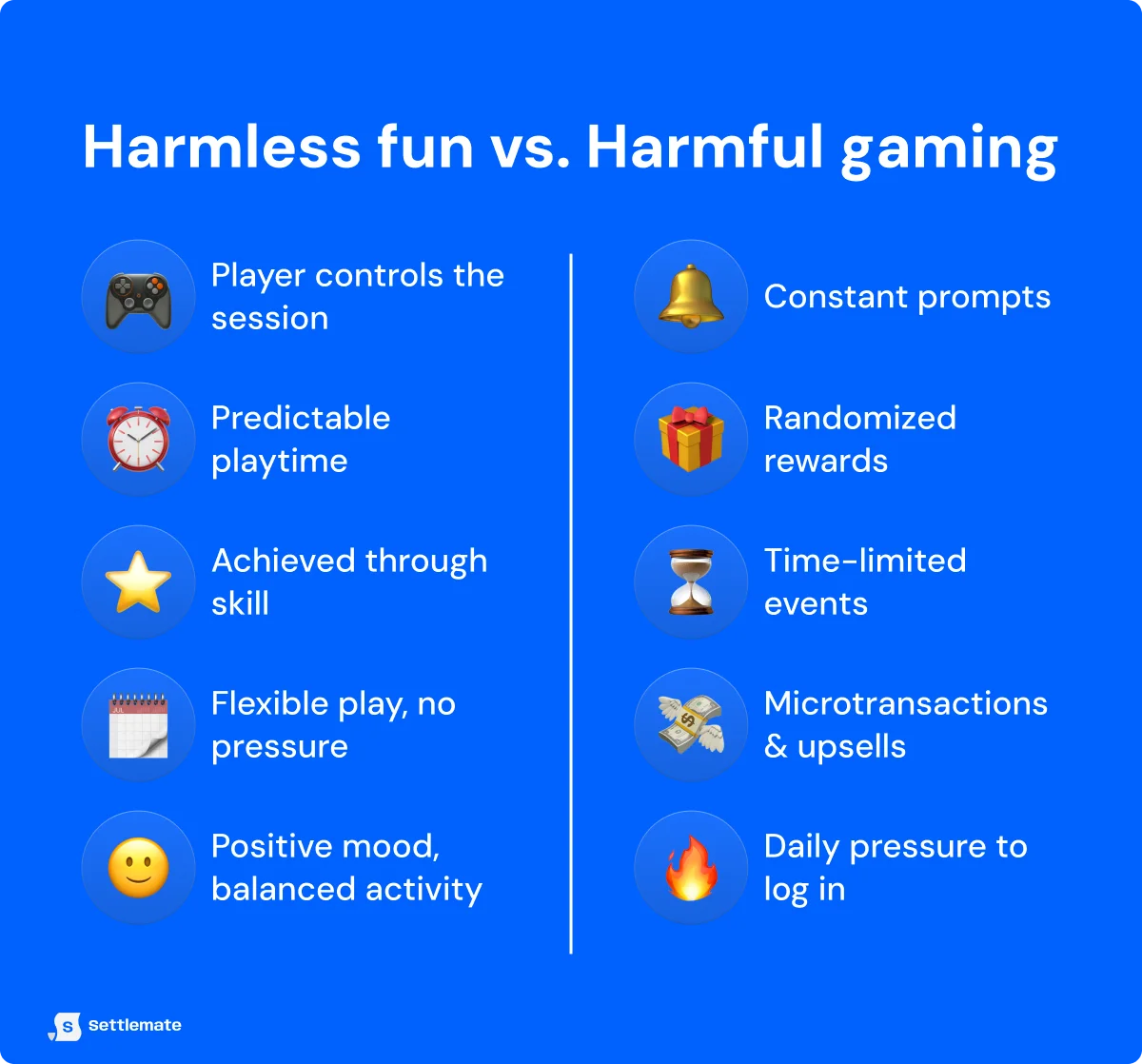
- Loot boxes that give random rewards, pushing players to “try again”
- Time-limited offers that pressure kids to buy before an item disappears
- Pay-to-win upgrades that force spending to keep up with friends
- Personalized offers based on a child’s play habits and past spending
3. Dark patterns and manipulative design targeted minors
According to video game addiction lawsuits, many games rely on dark patterns: design tricks that steer players into choices they wouldn’t normally make, like playing longer or spending money without realizing it.
These design elements include:
- Daily rewards and time-gated events that pressure players to log in every day
- Leaderboards, rankings, and cosmetic skins that fuel social comparison
- Algorithms that make the game easier or more exciting right when a player might stop
- Endless expansion packs or updates that keep the game feeling “unfinished”
4. Companies failed to warn parents about addiction risks
Families argue that game developers knew their products carried addiction risks but never disclosed those dangers. Parents weren’t told about the psychological mechanics built into these games or the potential for excessive play, compulsive spending, and mental health issues.
These companies also chose not to build any safeguards that could’ve reduced those risks for minors, such as:
- Parental controls
- Nightly lockouts
- Purchase and play-hour caps
Who is eligible for a game addiction lawsuit?
Eligibility depends on the lawyer or class action; different firms set slightly different requirements, and some cases are more selective than others.
In general, most video game addiction lawsuits focus on young players who developed addiction-related issues after being exposed to manipulative game design.
The table below breaks down the common eligibility factors seen across current filings:
Which companies can a game addiction lawsuit be filed against?
Any game studio that uses addictive design, microtransactions, or manipulative engagement systems could face a video game addiction lawsuit.
However, a handful of companies show up again and again in these cases. Their titles heavily rely on psychological hooks, reward loops, and monetization models that plaintiffs say fuel compulsive play in young users.
Here are the repeat offenders:
Why a video game addiction lawsuit is more than just a lawsuit
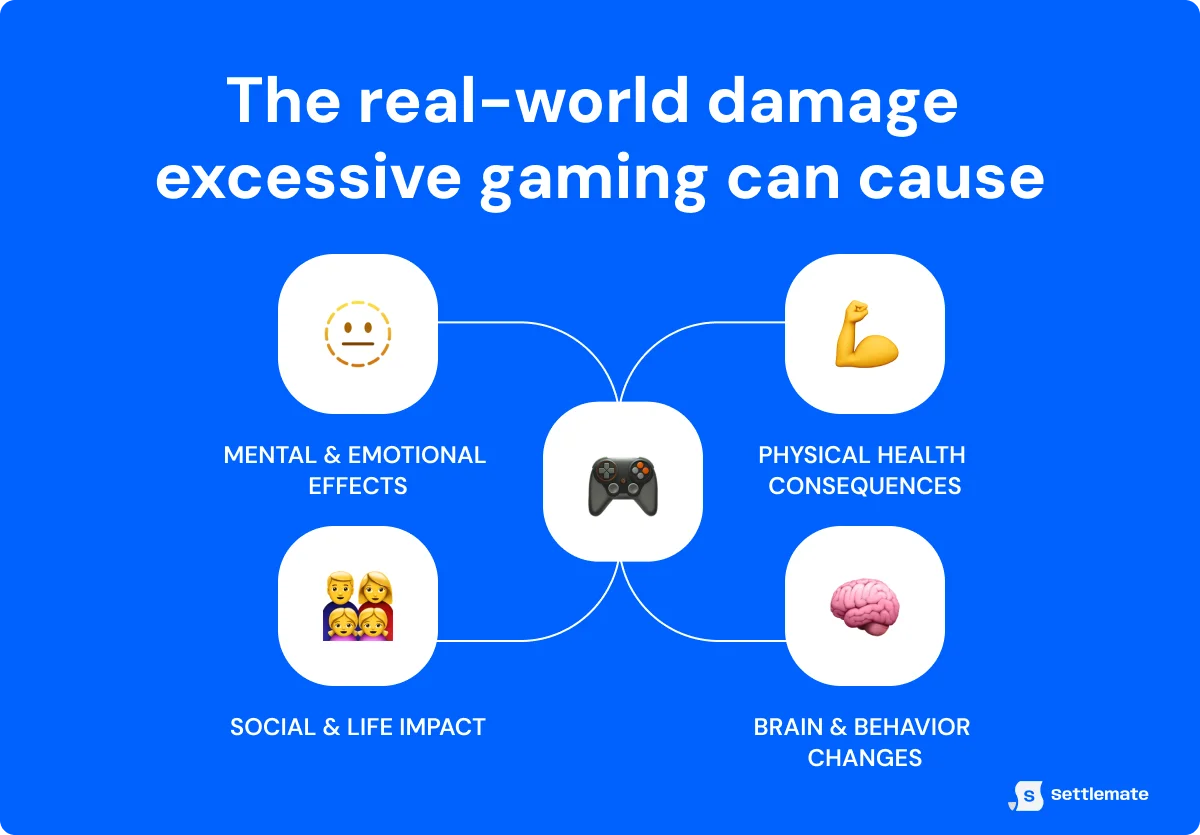
A video game addiction lawsuit isn’t about blaming kids for playing too much or dragging companies into court over a “silly” game. It’s about recognizing the real-world damage excessive gaming can cause.
Mental and emotional effects
Excessive gaming can destabilize a young person’s mood and emotional regulation, especially when it replaces sleep, social connection, or healthy coping skills. This often shows up as:
- Anxiety, depression, and irritability
- Withdrawal symptoms when gaming is restricted
- Gamer rage and emotional outbursts
- Worsening attention problems or ADHD symptoms
- Heightened loneliness or social anxiety
Physical health consequences
Long, repetitive gaming sessions strain the body in ways that build up over time, leading to injuries and health issues that show up in the real world, not just on a screen. Common problems include:
- Carpal tunnel, gamer’s thumb, and other stress injuries
- Eye strain, headaches, and blurred vision
- Chronic sleep disruption and fatigue
- Neck, shoulder, and back pain
- Seizures in individuals sensitive to visual triggers
Brain and behavior changes
Addictive gameplay can reshape how the brain responds to rewards, making it harder for players to disengage or self-regulate. Research links these patterns to:
- Dopamine surges similar to those in other addictions
- Cravings and withdrawal when gameplay stops
- Reduced impulse control or decision-making ability
- Changes in brain regions tied to motivation and reward
Social and life impact
As gaming crowds out daily responsibilities and real-world interaction, the effects ripple into school, relationships, and long-term development. These shifts often include:
- Academic decline or skipping school to play
- Growing isolation and loss of friendships
- Family conflict or withdrawal from parents and siblings
- Neglecting hygiene, chores, or basic responsibilities
- Losing interest in hobbies, sports, or social activities
How video game addiction lawsuit settlements are calculated
In most lawsuits, settlement amounts come down to the harm suffered and the evidence proving it.
Individual lawsuits tend to pay more because the damages are personal and detailed. Class actions pay less per person but move faster because the harm is grouped across large numbers of people.
Gaming addiction cases don’t fit neatly into either model.
They’re new, medically complex, and tied to harms that aren’t always easy to measure. This makes predicting payouts difficult.
Still, several key factors shape how much a claimant can receive:
- Severity of the addiction: Courts compensate based on how deeply the addiction disrupted one’s daily life. Diagnosed conditions like anxiety, depression, ADHD, gaming disorder, or severe withdrawal behaviors generally lead to higher payouts.
- Medical costs: The more treatment required (e.g., therapy, counseling, medication, rehab, or care for physical injuries), the higher the compensation. Documented medical bills directly increase case value.
- Educational or career impact: If gaming addiction caused falling grades, school refusal, the need for tutoring, or lost job opportunities, settlements rise to reflect long-term losses.
- Financial losses: Excessive spending on microtransactions, loot boxes, hardware, or other compulsive purchases can be reimbursed, especially when the spending was done by a minor.
- Family harm: Addiction often strains relationships. When families can show emotional distress, loss of companionship, or breakdowns at home, those damages add to the claim.
- Long-term impairment: Cases involving permanent mental health conditions, disability, or suicide attempts fall in the highest compensation brackets due to the lifelong impact.

How to file a claim for a video game addiction lawsuit
You can pursue a video game addiction case in one of two ways: as your own individual lawsuit or by joining a larger class action. Below, we break down how each option works and what to expect.
1. Individual video game addiction lawsuits
Many families choose an individual lawsuit because it lets them tell their story in full and pursue compensation that reflects the specific, sometimes severe impact that gaming addiction had on their child.
Individual cases typically allow for more tailored damages, but they also require more evidence, more time, and more direct involvement than joining a class action.
Here’s how to file an individual video game addiction lawsuit:
- Consult a lawyer: A lawyer will review your situation and ask about symptoms, play history, spending information, and timeline details. They will then explain whether your case is viable.
- Gather documentation: You’ll provide medical records, gaming logs, purchase history, device and platform details, diagnoses, or anything showing how the addiction developed and how it harmed the individual.
- Build the case: Your lawyer may interview family members, request psychological evaluations, pull financial records, and consult medical or behavioral experts to connect the harm to the game’s design.
- File the complaint: The lawyer will draft and file the lawsuit, naming the defendants, outlining the harm, and detailing the damages you’re seeking.
Once filed, your case officially begins. Most cases settle before trial, but outcomes vary. The lawsuit may be resolved through settlement, dismissal, or, in rare cases, a jury verdict.
2. Video game addiction class action lawsuits
A true class action isn’t available for gaming addiction cases—at least not yet. The injuries, games, and defendants vary too widely for courts to bundle everyone into a single unified class.
Still, there are ongoing efforts to coordinate these cases, especially as more families come forward with similar claims against the same companies.
Once a video game addiction class action does emerge, you’ll be able to join it by:
- Submitting basic information about the affected player
- Documenting the harm
- Confirming the games involved
From there, your claim becomes part of the larger group, giving you a simplified legal path without having to build a full individual case from scratch.
Be first in line for a video game addiction class action
Waiting for a video game addiction class action to materialize doesn’t have to mean daily Google searches, legal guesswork, or hoping you don’t miss the news. You can hand off that job to a tool built for it.
Settlemate automatically tracks emerging class actions and eligibility requirements, so you’re first in line the moment a video game addiction settlement opens.
This also applies to any other pending settlements you might qualify for, thanks to:
- Automatic eligibility matching: Answer a few quick questions, and Settlemate flags every class action you qualify for.
- Lawyer-free filing: When a settlement opens, you can file your claim directly in the app with just a few taps.
- Real-time tracking: See live updates on your claim status, payout timelines, and key deadlines.
- Smart alerts: Get notified the moment a gaming-related settlement goes live instead of manually checking websites.
- Automatic receipt and purchase scanning: Settlemate reads your email (with permission) to identify eligible purchases.
Download Settlemate for iOS or Android and never miss a payout you’re owed.