


Starting a class action lawsuit can feel intimidating, and for a good reason. You’re standing up for a group of people who’ve faced the same problem and taking on a company with deep pockets and seasoned lawyers on its side.
Still, class actions are often the most effective way to hold corporations accountable and make sure everyone gets the compensation they deserve. And once you understand how the process works, it becomes far less overwhelming than it first appears.
In this guide, we’ll explain how to start a class action lawsuit in a few simple steps. You’ll learn what it takes to take the case off the ground, what to expect along the way, and how to improve your chances of success.
How do you start a class action lawsuit: Key steps
Starting a class action lawsuit might sound complicated, but it comes down to a few key steps:
- Doing research
- Finding lead plaintiffs
- Engaging a class action attorney
- Filing a class action complaint
- Seeking class certification
- Notifying class members
1. Doing research
Before officially starting a class action lawsuit, you must make sure there’s a solid basis for the case to avoid wasting time and energy.
Start by understanding what actually qualifies as a class action. The key question is whether other people have experienced the same or a similar problem as you. If you can show that your situation isn’t unique but part of a broader pattern, you’re already taking the big first step toward building a strong class action case.
2. Finding lead plaintiffs
Lead plaintiffs, also known as class representatives, are the key players in any class action lawsuit. They take an active role in the case by meeting with lawyers, showing up for court hearings, and making important decisions on behalf of all class members—people who have suffered the same harm.
While a class action technically requires only one lead plaintiff, having several can make your case stronger by showing that the issue affects a broader group and reflects a united effort.
3. Engaging a class action attorney
Class action lawsuits are complicated affairs and can’t get off the ground without a lawyer. That’s why your next step should be hiring an experienced class action attorney who knows the process inside out.
Your attorney will first review your situation to see if it truly qualifies as a class action. In some cases, they might suggest filing an individual lawsuit instead, especially if you’ve suffered unique or significant harm, or if privacy concerns make a group claim impractical.
If your attorney decides that a class action is the right path, they’ll take over several key duties:
- Recruiting other lead plaintiffs
- Gathering evidence
- Conducting legal and factual research
- Ensuring procedural compliance
- Preparing and filing documentation
- Evaluating potential risks and outcomes
Because class action lawsuits require specialized knowledge, you need to choose an attorney with a proven track record in this legal area. Here are a few practical tips to help you find the right one:
4. Filing a class action complaint
Once your attorney has gathered enough evidence and clearly defined the scope of your claim, they’ll draft and file what’s called a class action complaint.
Whether the complaint will be filed in a federal or state court depends on the specifics of your case. For example, if at least one class member lives in a state different from the defendant’s and the total amount in dispute exceeds $5 million, the case will typically go to a federal court. On the other hand, if there are fewer than 100 class members, the case will most likely remain under state court jurisdiction.
The complaint is the foundation of your case. It outlines exactly what happened, who was affected, and what the lawsuit is asking for. It should:
- Identify at least one lead plaintiff (class representative)
- Name the defendant
- Describe what the defendant did wrong
- Define the group of people affected (the class)
- Explain the damages suffered
- State what kind of relief or compensation the class is seeking
- Show that the claim meets the criteria for a class action
5. Seeking class certification
Filing the complaint sets the legal process in motion, but it doesn’t automatically make your case a class action. For that to happen, a judge must first certify the class.
To get class certification, your attorney will file a motion showing that your case meets four key requirements outlined in Rule 23 of the Federal Rules of Civil Procedure:
- Numerosity: The group needs to be large enough that filing individual lawsuits would be impractical. The law doesn’t prescribe the minimum number of class members, but courts usually reject class actions with fewer than 20 members.
- Commonality: All class members must have been harmed in the same or similar way. For example, after the Volkswagen gas emission scandal in 2015, thousands of car owners qualified as class members because they were deceived by the same company and suffered comparable financial losses.
- Typicality: The claims of the class representatives must reflect those of the entire class to ensure no conflict of interest.
- Adequacy of representation: Class representatives must show they can fairly and effectively protect the interests of the class, without bias or personal gain.
If the court grants certification, it will issue an order clearly defining:
- The class and its members
- The class’s claims
- Central issues in dispute
- The applicable defenses
If certification is denied, the case can’t proceed as a class action lawsuit. However, you and other affected individuals can still pursue separate, individual claims against the defendant.
6. Notifying class members
Once the court certifies the class, it authorizes public notice to reach all potential class members. Depending on the size of the class and how easy it is to identify members, notices may be sent via mail, email, online platforms, or traditional media outlets such as television or newspapers.
In most cases, people are automatically included in the class if they meet the definition of a class member. They can, however, opt out of the class action lawsuit if they:
- Suffered more serious financial or physical harm than others
- Want more control over the case
- Believe they can receive higher compensation through an individual lawsuit
Individuals who opt out are free to file their own lawsuits against the defendant. However, those who remain in the class will be bound by the final outcome of the class action lawsuit, whether it results in a settlement or a court judgment.
What happens after starting a class action lawsuit?
Once potential class members have been notified, the initial phase of the class action lawsuit is over, and it’s time for the discovery stage. This is where both sides share information and conduct depositions.
Based on the evidence uncovered during discovery, the defendant may decide to settle rather than go to trial. In fact, most class action lawsuits end at this stage, as settlements allow both sides to avoid the high cost and uncertainty of going to court.
If no settlement is reached, the class action case moves to trial. The class representatives and their lawyers present their arguments before a judge or a jury, who ultimately determine the verdict and potential compensation.
If you win the case, the court will approve a compensation plan, and the awarded money will be distributed among class members. In most cases, class members must submit a claim form by a specific deadline to receive their share of the settlement or judgment.
Can you receive a settlement payout without starting the class action lawsuit?
Yes, you can still receive a payout from a class action settlement even if you didn’t start the lawsuit or take an active role in it. Class membership is typically automatic as long as you meet the eligibility criteria defined in the case.
Courts make an effort to notify everyone who may qualify as a class member, but reaching every individual directly isn’t always possible, whether due to the size of the class or outdated contact information. Instead, the courts often rely on public announcements (for example, publishing notices in newspapers) and assume all class members have been informed, even if some never actually see the notice.
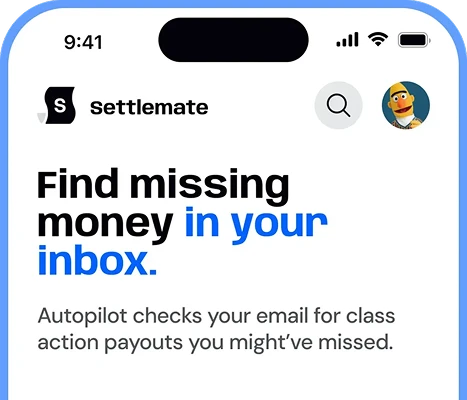
As a result, you could easily miss out on a class action payout simply because you didn’t realize you were eligible for it. You can sign up for Settlemate to make sure that doesn’t happen.
How Settlemate makes it easy to claim settlement money
Every year, billions of dollars in settlement money go unclaimed, often for the following reasons:
- Many people don’t realize they’re eligible for a payout
- The process of filing a claim for a payout can feel overwhelming due to all the paperwork, deadlines, and confusing requirements
Settlemate can solve both problems. It automatically detects class action settlements you’re eligible for and simplifies the entire claims process. Settlemate does this thanks to a range of user-friendly features, such as:
- Automatic scanning: To ensure you never miss out on money you’re owed, Settlemate scans your purchase history and emails (with your permission) to find settlements you’re eligible for.
- Pre-filled claims: Settlemate streamlines the claim process with pre-populated forms that you can submit in minutes, directly from your phone.
- Clear proof guidance: If a claim requires supporting evidence, Settlemate will tell you what documents or information you’ll need to provide.
- Real-time tracking: You can stay on top of deadlines, payout timelines, and case developments with instant notifications.

Get started with Settlemate today by downloading the app from the App Store or Google Play.
Not sure if Settlemate is the right fit for you? Our Value Guarantee makes signing up risk-free. If you haven’t received verified value to cover your membership fees after a year, you’ll receive complimentary membership extensions until you do.
Frequently Asked Questions
We’ve answered the most common questions about starting a class action lawsuit:
Who can start a class action lawsuit?
Anyone who has experienced harm or loss may file a class action lawsuit with the help of an attorney. However, the court must review the case and certify it, confirming it meets the requirements to proceed on behalf of a group.
How much does it cost to start a class action lawsuit?
Starting a class action lawsuit doesn’t involve any upfront costs. Most class action attorneys work on a contingency fee basis, meaning they cover all expenses and only get paid if the lawsuit is successful.
How long do class action lawsuits take?
The timeline varies greatly depending on the complexity of the case, the number of parties, and whether the case goes to trial. On average, class action lawsuits take between one and three years to resolve, but some can last much longer, especially when extensive discovery or appeals are involved.