


.png)
Wondering how to file a class action lawsuit without a lawyer so you can save money or keep more control over your case? Going solo may sound like a simple and budget-friendly way to pursue justice and the compensation you’re owed, but is it possible in the first place?
This guide explains whether filing a class action on your own is legally viable and what your potential alternatives are. It also lays out what you can and can’t do without legal representation, so you can choose the best path forward.
Can you file a class action lawsuit without a lawyer?
It’s generally not possible to file a class action lawsuit without a lawyer. Courts expect trained legal counsel to handle the process and make sure that everyone in the group (the class) is properly and equally represented.
Class actions typically involve a lot of people and complex rules. Without legal expertise, it would be easy to misrepresent the group’s situation. This would weaken, or even derail, the entire case despite your best intentions.
Why is seeking legal assistance required when filing a class action lawsuit?
Hiring a lawyer to file a class action lawsuit isn’t just a matter of formality that you must comply with to meet the court’s requirements. Legal counsel in class actions is essential for the following reasons:
- Complexity of class action certification
- Expert case management
- Fair representation
- Negotiation skills
Complexity of class action certification
Class action lawsuits are complex, and they need to meet specific criteria defined by Rule 23 of the Federal Rules of Civil Procedure:
- Numerosity: The proposed class needs to be large enough that it would be inefficient for each member to file an individual lawsuit. While there’s no pre-defined minimum number of class members, the numerosity requirement is typically met if the class consists of at least 20 members.
- Commonality: All class members need to have suffered the same or similar injury so that they can pursue justice together. In other words, there must be a core issue that affects everyone in the group, even if the details aren’t identical.
- Typicality: The claims of the lead plaintiffs must be representative of the claims of the entire group, so that their interests align with everyone else’s.
- Adequacy of representation: The lead plaintiffs (and their lawyers) need to show they can adequately and fairly protect the interests of the entire class.
If a case fails to meet any of these criteria, the court will deny certification, ending the battle before it even started. Experienced class action attorneys know these requirements inside and out and can guide you through the process without costly missteps.
Expert case management
Managing a class action lawsuit is incredibly challenging and requires experience and expertise.
Gathering evidence, updating class member records, and handling filings and paperwork are crucial tasks that a class action lawyer and their team are in charge of. They also keep track of deadlines and coordinate depositions, ensuring compliance with the law every step of the way.
Unexpected issues can often arise during the process, and having a lawyer by your side ensures the issues are resolved quickly and with the interest of the entire class in mind.
Fair representation
Representing a large group requires objectivity so conflicts of interest are minimized and everyone’s voice is heard. Without legal training, you might:
- Unintentionally favor certain class members
- Blur the line between your own experience and the group’s needs
- Make calls that benefit you more than others
An independent attorney serves as an unbiased advocate bound by duty to the whole class. This neutrality strengthens the case, reduces conflicts, and boosts credibility with the court.
Negotiation skills
Class action attorneys are skilled negotiators. They know how to work with the defendant’s team, apply the right pressure, and push for a fair settlement. If talks break down, lawyers can take the case to the court, prepare arguments, and work with expert witnesses to ensure the class’s interests are adequately represented.
Without that legal background, you could misread the process, miss red flags, or accept a lowball offer. This would leave the entire class vulnerable and could result in everyone walking away with less than they rightfully deserve.
Can you become a lead plaintiff in a class action lawsuit without a lawyer?
A lead plaintiff is usually the person who starts a class action lawsuit and represents all members of the class. They take on key responsibilities, including:
- Representing the interests of the entire class
- Attending court hearings
- Evaluating and approving settlement offers with their lawyers
Since a lead plaintiff represents all other members of the class, courts require a qualified class counsel. As a result, you can’t become a lead plaintiff and prosecute a class action without an attorney.
Is there a way to file a lawsuit without a lawyer?
You can’t file a class action lawsuit without a lawyer, but you can file an individual lawsuit on your own. This is called pro se (Latin for “for oneself” or “in one’s own behalf).
Going pro se can make sense if you:
- Want to pursue justice for the harm you personally suffered
- Aren’t sure if there are others who have suffered a similar damage
- Wish to start the process without hiring lawyers to save on legal fees or keep more control over the case
You can also turn an individual lawsuit into a class action if the case meets relevant certification requirements. To check whether others were harmed in the same way as you, you can:
- Publish a notice in a local newspaper
- Post in online forums or social media groups
- Ask around your neighborhood or workplace
If your research shows there’s a broader group with similar claims, the next step is to pursue class certification. At this point, you’d have to hire an attorney to guide you through the certification process and help you build a strong case for the whole group.
Individual lawsuit vs. class action lawsuit
If you want to start the lawsuit process without a lawyer, an individual lawsuit is your best bet. Before you move forward, keep these key differences between individual and class action lawsuits in mind:
Can you sign up for a class action lawsuit without a lawyer?
You don’t need a lawyer to join a class action. Once a case is certified, the attorneys hired by the named plaintiffs represent anyone who fits the class description.
In other words, when you sign up for a class action lawsuit, you’re joining after most of the legal groundwork has been done, so you don’t need your own lawyer to participate or receive compensation.
How to sign up for a class action lawsuit?
Most people don’t need to “sign up” for a class action. If you match the class definition, you’re usually included automatically and will receive the best practicable notice, often by mail or email. If identifying all class members isn’t doable (e.g., limited records, very large classes, or subjective eligibility), the courts may use publications or digital notices to reach potential members.
However, getting paid usually does require action on your part. Many class action settlements ask you to file a claim form by a certain deadline, sometimes accompanied by simple proof like a receipt.
This means you could miss out on an opportunity to get back what you’re owed simply because you didn’t realize you were eligible for a class action payout.
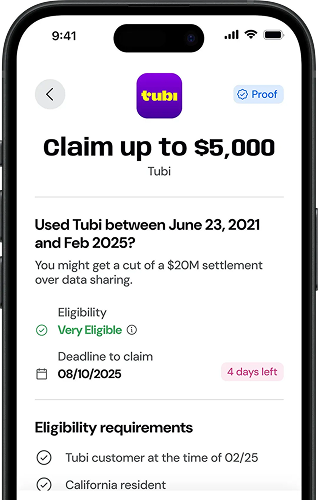
If you want to reduce the chances of leaving money on the table, a tool like Settlemate can track settlements and deadlines, identify eligibility, and help you file a claim in minutes.
How does Settlemate help you claim settlement money?
Manually tracking class action settlements you qualify for takes time and energy. Even if you do find one, you still have to fill out forms, track deadlines, and deal with paperwork for which legal representation isn’t required.
It’s a lot to handle, so many people give up before they even start, which is why billions in settlement dollars go unclaimed every year.
Settlemate helps you get back what’s yours by automatically detecting eligible settlements and guiding you through the process of filing a claim.
You can let Settlemate do the heavy lifting with features like:
- Automated scanning: With your permission, Settlemate analyzes your emails and purchase history to find matches for eligible settlements. You can also upload receipts to auto-detect additional claims.
- Pre-filed claims: Settlemate’s pre-filled claim forms cut the legwork and let you submit a claim in minutes.
- Real-time settlement tracking: The app notifies you whenever there’s an update on your claim status, payment estimate, or deadline to ensure you’re always in the loop.
- Smart notifications: If a new settlement you’re eligible for pops up, Settlemate will notify you right away.
- Clear proof guidance: If a settlement claim requires proof, Settlemate will tell you exactly what you need to submit.
- Value Guarantee: If you don’t recover your membership fee through verified value in the first 12 months, we’ll extend your membership for another year at no additional cost.
Get started with Settlemate today. Download the app from the App Store or Google Play and start exploring the settlements you qualify for right away.
Frequently asked questions
We’ve answered some commonly asked questions about class action lawsuits:
How can you initiate a class action lawsuit?
The first step in starting a class action lawsuit is consulting a lawyer. They can explain the process, assist with case research, gather evidence, and provide insight into the typical duration of class action lawsuits.
Who pays legal fees in a class action lawsuit?
Class action lawyers typically take a court-approved percentage of the settlement. They work on a contingency basis, meaning they don’t get paid unless the class action is successful. Lead plaintiffs and other class members don’t pay the lawyers directly, as the legal fees and expenses are deducted from the settlement fund before the rest is distributed to the class.
How do I find a class action lawyer?
To find a reliable class action lawyer, do your homework; look for deep experience, a strong track record, and a clear, transparent fee structure with no upfront costs. You can also ask friends or colleagues for referrals.